What World Environment Day Means When You Live next to a Game Reserve.
By Katie Wormald | Kate on Safari | Life in the Bush | Raising Wild-Hearted Children
Teaching children about the environment looks different when you live inside a game reserve. This morning, before the school run, my children watched a flock of guinea fowl at the front door.
Nobody commented. Nobody reached for a phone. The youngest glanced up from her cereal, went to the door to watch for a moment with the quiet attention of a child who has been watching animals her whole life, and went back to eating. The guinea fowls finished their morning dust bath and then moved on. The morning continued.
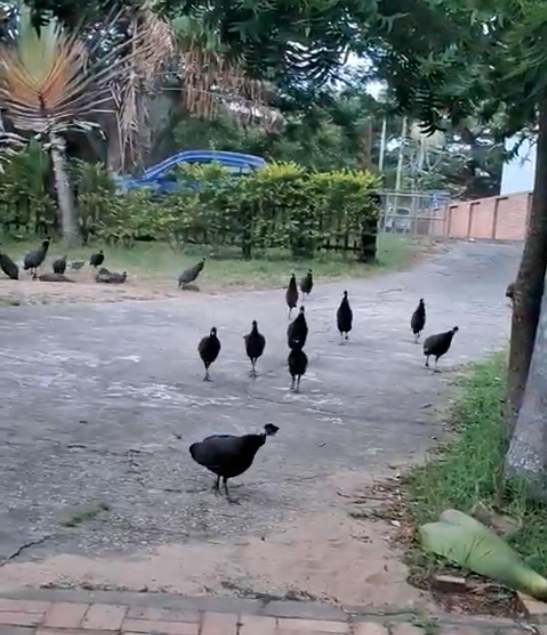
This is Tuesday in our house. This is just life.
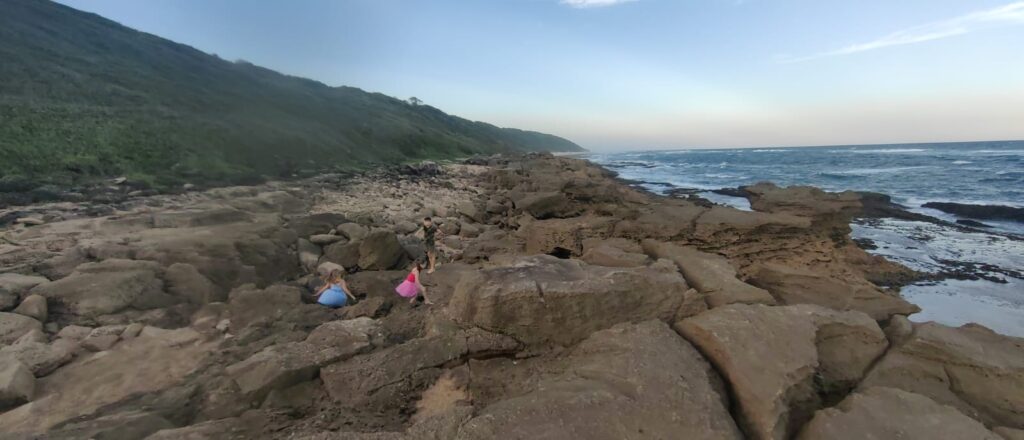
We live on the edge of iSimangaliso Wetland Park in St Lucia, KwaZulu-Natal – a UNESCO World Heritage Site and one of the most biodiverse wilderness areas on the African continent. My husband Ashley previously worked with WWF and Wildlife Act, monitoring black rhino and tracking wildlife across KwaZulu-Natal. The environment is not something we visit or study or care about from a distance. It is the ground beneath our feet, the sounds outside our window, the conversation at our dinner table every single evening.
And yet, on World Environment Day, I find myself thinking not about the extraordinary – not about the rhino Ashley tracked last week or the hippos that move through our garden at night – but about the ordinary. About how environmental connection is built, slowly and quietly, long before a child is old enough to understand what the word conservation means.
It Started With Bedtime Stories
From the night we brought our first child home, we read to them. Every night, without exception. And looking back at the books that filled those early years – the ones that got read until the spines gave out and the pages went soft at the corners – almost all of them had animals in them.
Giraffes Can’t Dance. Five Minutes’ Peace with Mrs Large the elephant. Little Mouse. The Ugly Five. Monkey Puzzle. Handa’s Surprise.
We did not choose these books because we were trying to teach our children about the natural world. We chose them because they were warm and funny and our children loved them. But something happened in the choosing, quietly and without intention – our children grew up with animals as their first fictional companions. Their earliest understanding of emotion, of courage, of family and belonging and difference, came wrapped in feathers and fur and the particular golden light of an African landscape.
Many of these books feature in our African wildlife books for children guide – a good place to start if you want to build your own wild library at home.
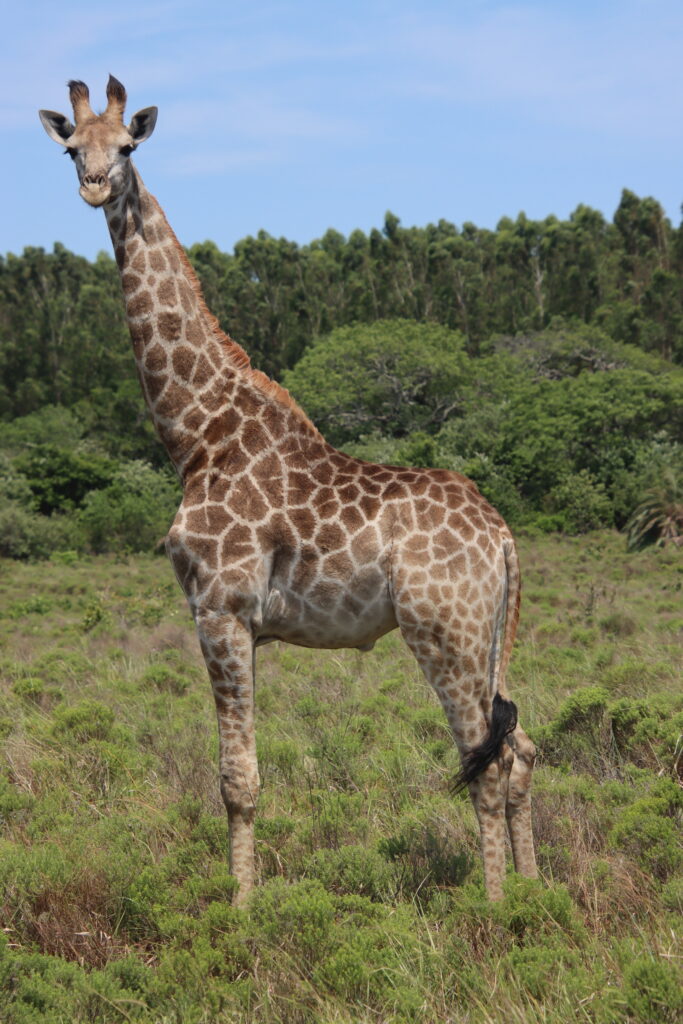
By the time they were old enough to see a real giraffe on a game drive, they already loved giraffes. Not because we had taught them to. Because Gerald had shown them what it felt like to find your own rhythm under the stars.
That, I think, is where environmental education actually begins. Not with facts or lessons or conservation talks – though all of those matter – but with love. With the kind of love that starts in a picture book at bedtime and grows, slowly and steadily, into something that lasts.
This is where teaching children about the environment truly begins – not in a classroom but in a story.
The Theme for World Environment Day 2026
This year’s World Environment Day theme is “Inspired by Nature. For Climate. For Our Future.” It is a theme that asks us to look at nature not as something to be protected from a distance, but as the source of every solution we need – to look at forests, wetlands, oceans and wild places and understand that these are not luxuries. They are the systems that keep us alive.
Living where we do, this is not an abstract idea. The iSimangaliso Wetland Park is one of Africa’s great wetland systems – a place where five distinct ecosystems meet, where the water cycle is visible and real, where the health of the estuary determines the health of everything that depends on it. Ashley’s conservation work is not separate from climate action. It is climate action – the daily, unglamorous, essential work of protecting the ecosystems that regulate our world.
Our children understand this not because we have sat them down and explained it, but because they have grown up inside it. They know what a healthy wetland looks like. They know what it sounds like when the fish eagles are calling and the hippos are moving and the water is full. They will know, therefore, when something is wrong. And that knowledge – embodied, sensory, deeply felt – is the most powerful form of teaching children about the environment there is.
How We Actively Go About Teaching Children About the Environment
I want to be honest about something: we do not have a curriculum for this. We do not sit our children down on World Environment Day and deliver a lesson about climate change. The teaching happens in the cracks – in the questions children ask when they are paying attention, and in the answers we give when we take those questions seriously.
But there are things we do deliberately, and they are simpler than most people expect.
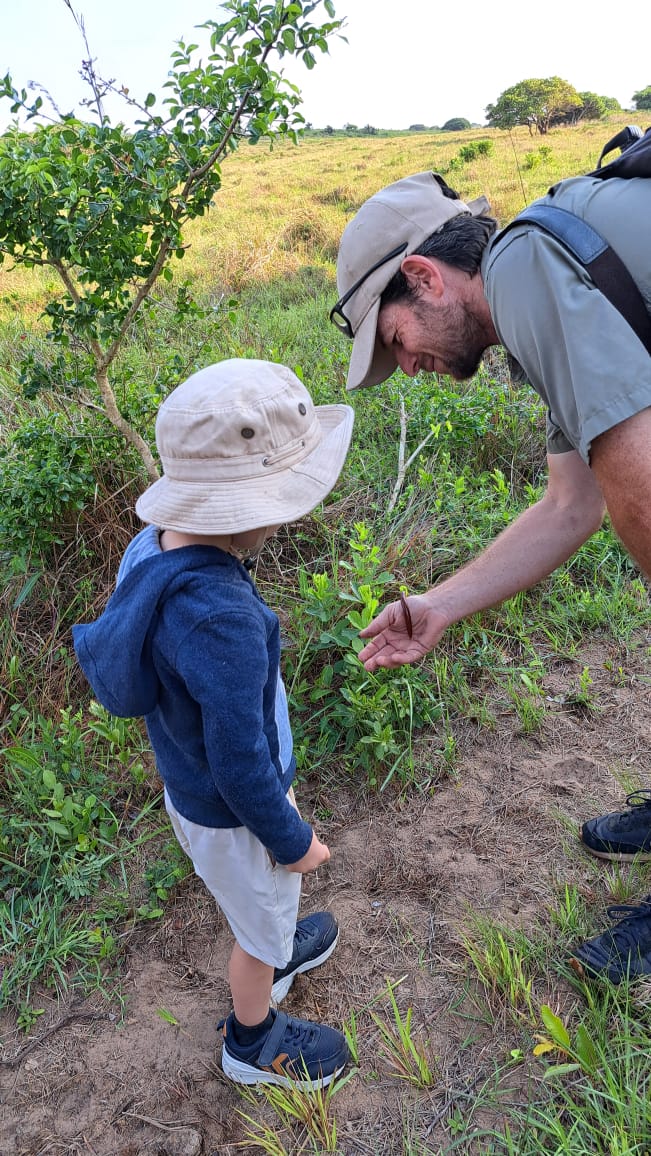
We name things. Not just “a bird” but a lilac-breasted roller. Not just “a tree” but a fever tree, and here is why it is called that, and here is what lives in it. Naming things is the beginning of caring about them. You cannot grieve the loss of something you never knew existed. This is one of the simplest and most effective ways of teaching children about the environment.
We read. Still, now, with children who are well past picture books. We have wildlife field guides in the vehicle on every game drive. We have natural history books on the shelves alongside the fiction. We follow questions to their sources — if a child asks why elephants have such large ears, we find out together, properly, from a book or a guide or Ashley, and we do not settle for “to keep them cool.”
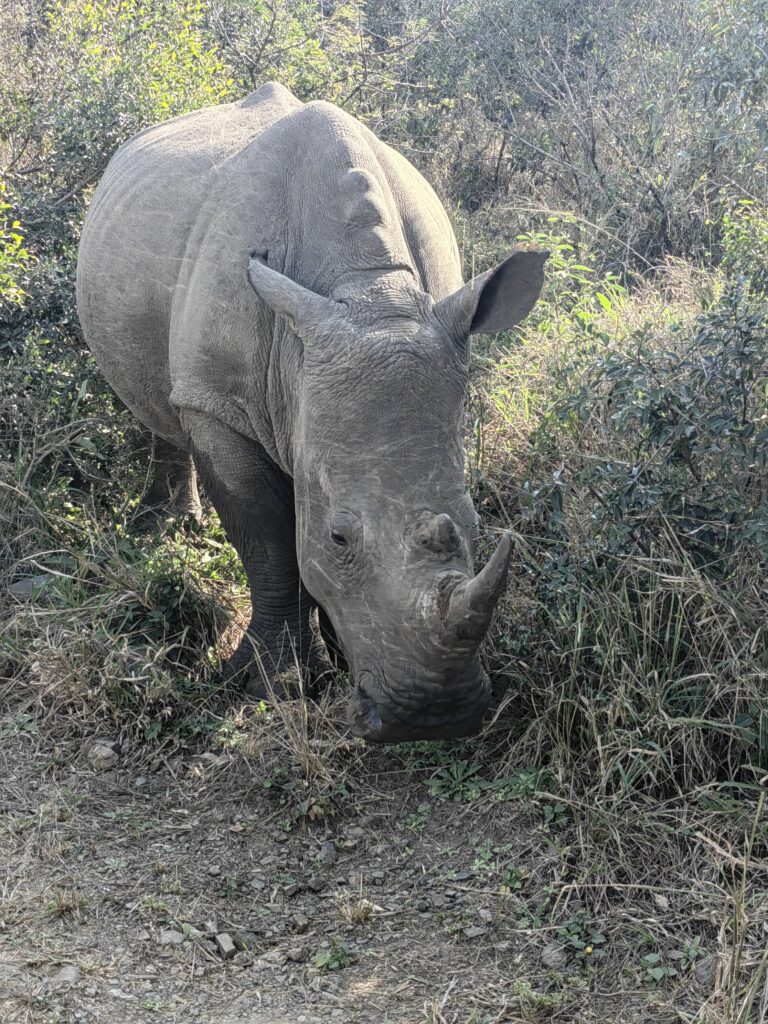
We let Ashley’s work be visible. Our children know what their father does and why it matters. They know about black rhino monitoring. They know about the BREEP programme. They know that the rhinos they see on game drives are there, in part, because people like their father go out before dawn and make sure they are still there. That is not a small thing for a child to grow up knowing.
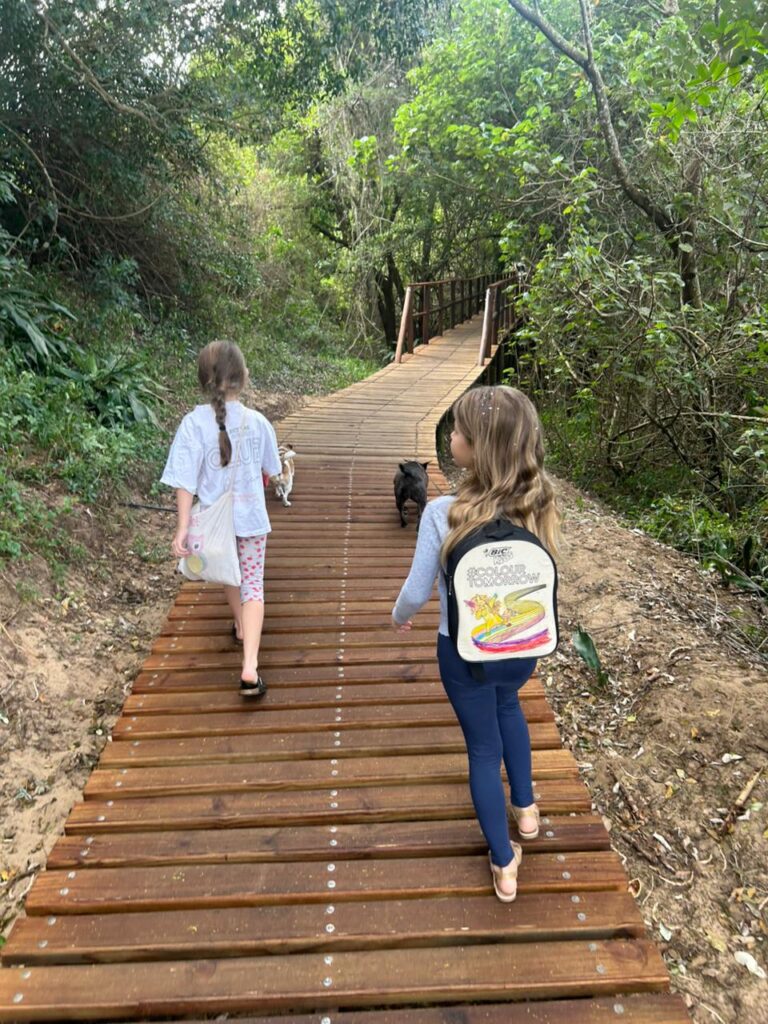
We go outside. Consistently, regularly, without making it a performance. A walk, a drive, a morning on the estuary. Not always structured, not always educational in any obvious sense – but always in the presence of the living world, which does its own teaching if you give it enough time. Consistent time outdoors is, ultimately, the foundation of teaching children about the environment.
We take it seriously when they are sad about it. When our eldest learned about rhino poaching he was upset in a way that deserved a real response, not reassurance. We talked about it honestly – about the threat, about the people working to stop it, about what he could do. Protecting children from the difficulty of conservation is not kindness. It is, furthermore, a missed opportunity to raise someone who understands that the world needs them.
What iSimangaliso Has Given Our Children
There is a particular quality of attention that develops in children who grow up around wildlife – a patience and a stillness and a willingness to wait and watch that I have not seen replicated anywhere else.
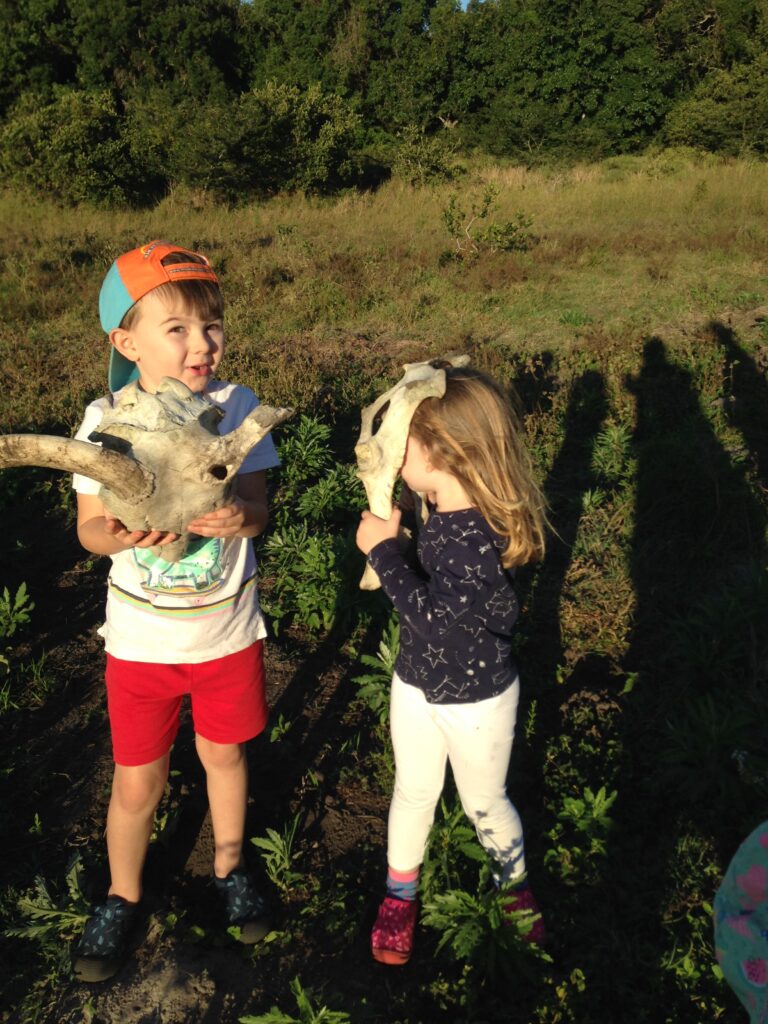
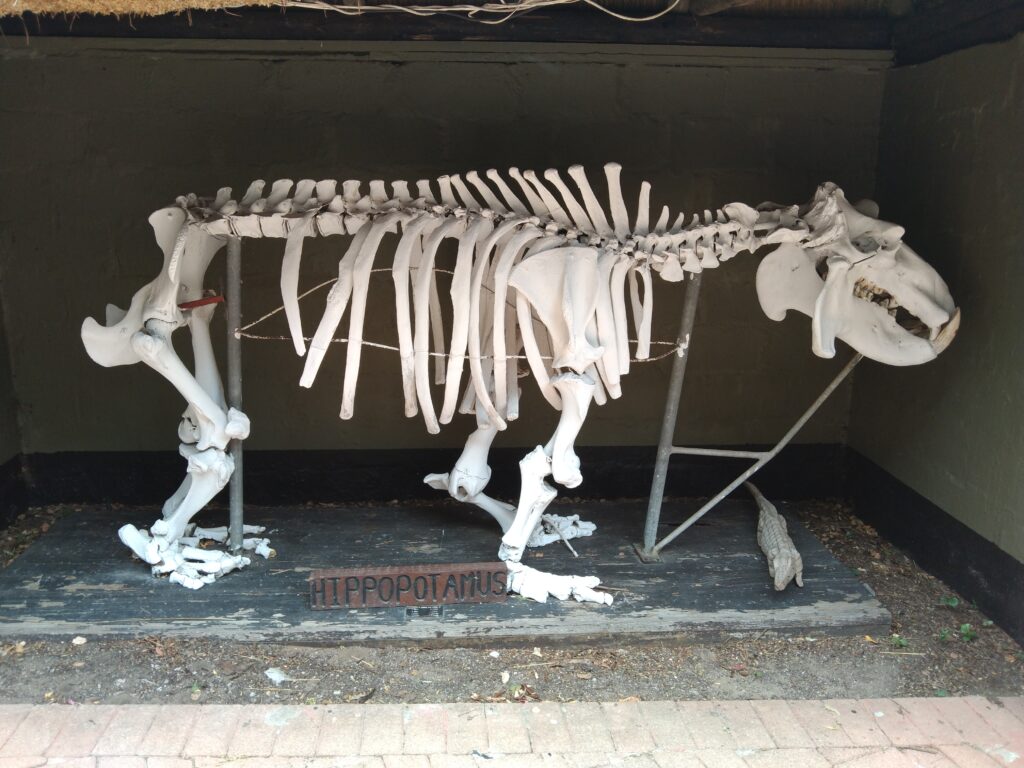
My children can sit in silence for twenty minutes watching a water monitor move along a bank. They can identify a bird by its call before they can see it. They notice things – the way the light changes before a storm, the particular stillness of the bush when a predator is close, the difference between a hippo that is relaxed and one that is not.
These are not skills we taught them. They are skills the bush gave them, because they were there often enough and quietly enough for the bush to do its work. Living here has made teaching children about the environment the most natural thing in the world.
iSimangaliso is classified as a UNESCO World Heritage Site for very good reason. It is irreplaceable – ecologically, culturally, scientifically. And it is, for our family, simply home. The place our children’s earliest memories are made. The place they will carry with them wherever they go, whatever they do, for the rest of their lives.
That is, I think, the most important thing World Environment Day asks us to consider. Not just how we protect wild places, but who grows up inside them. Who learns to love them. Who will be there, decades from now, to make sure they still exist.
If you want to understand more about what makes iSimangaliso such an extraordinary place for families, our educational safari for kids post goes deeper into why this kind of experience matters for children.
What You Can Do – Wherever You Are
You do not need to live in a game reserve to give your children an environmental education. You need, rather, to give them regular access to the living world in whatever form is available to you – and to take their questions seriously when they ask them.
Teaching children about the environment starts earlier than most parents realise. Read them books with animals in them from the very beginning. Let the natural world into your fiction as well as your facts. Start with Gerald the giraffe finding his rhythm under the African stars, and see where it leads.
Our free Safari Animal Mini Pack is a small place to start – six pages of wildlife learning designed to bring Africa’s animals into your family’s everyday life, wherever you are in the world.
GET YOUR FREE SAFARI ANIMAL MINI PACK
And if you want to go deeper – our Safari Animal Fact Card Set brings ten of Africa’s most iconic animals into your home, your kitchen table, your car journeys and your nature journals.
SHOP THE SAFARI ANIMAL FACT CARD SET
A Final Note For World Environment Day 2026
The theme this year is inspired by nature. And nature, in our experience, does not need much help inspiring children. It needs only access, and time, and adults who take it seriously enough to stop and look.
The guinea fowl outside our front door this morning did not know it was World Environment Day. They were simply bathing, exactly as it should be, in the place they belong.
My children, who have grown up reading about animals and watching them and asking endless questions about them, barely looked up from their cereal. Not because they don’t care – but because the presence of a wild animal outside the window feels, to them, entirely right. Teaching children about the environment is not a lesson, it is just our life.
That feeling of rightness is what teaching children about the environment is really about – not facts or lessons, but a sense of belonging to the living world. On World Environment Day and every other day of the year.
Let Africa teach your children what the world is made of.
Written by Katie Wormald – paediatric nurse, health visitor, mother of three and founder of Kate on Safari. Katie lives in KwaZulu-Natal, South Africa on the edge of iSimangaliso Wetland Park, with her husband Ashley, a passionate conservation ranger.