How to Get Your Kids Involved in Local Nature Initiatives (And Why It Matters More Than You Think)
By Katie Wormald | Kate on Safari | Wild Wisdom
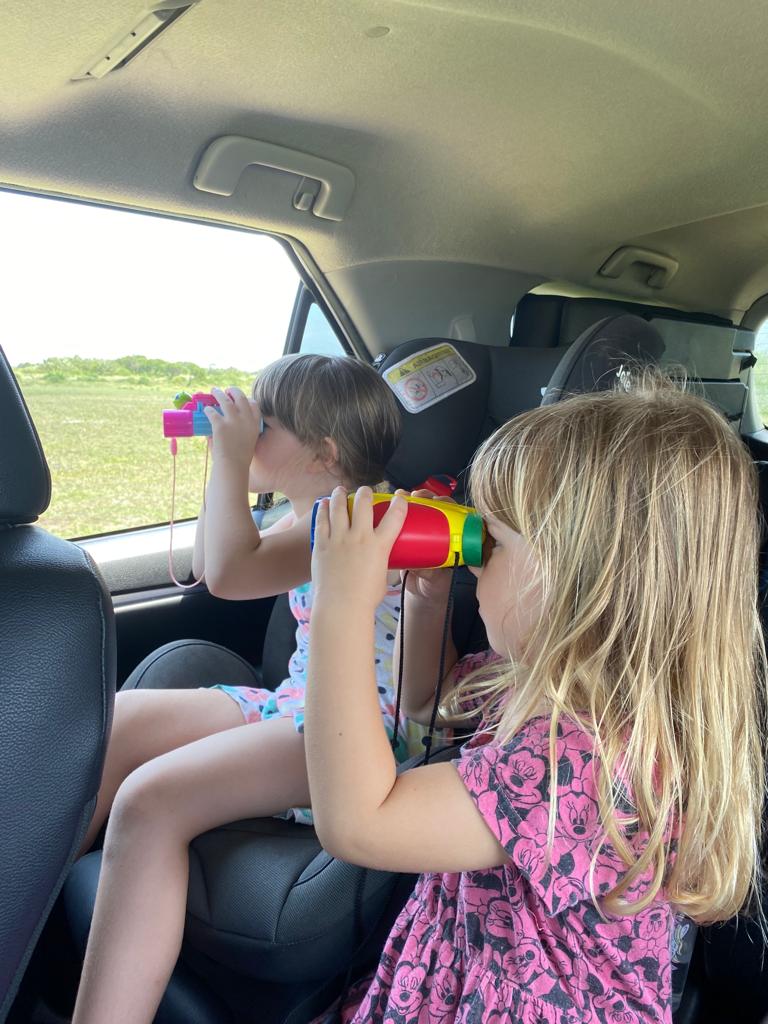
We recently took part in something special. And for once, I was up before the sun had properly committed to the day! By 7am, my children were standing at the trailhead in St Lucia, binoculars around their necks, wildlife books tucked under their arms, a phone loaded with the iNaturalist app, and a few ziplock bags for anything that needed a closer look. About twenty St Lucians had gathered for the same reason. The sky was blue, Freedom Day was being celebrated across South Africa, and the bush was doing what the bush always does — quietly getting on with being extraordinary.
We were taking part in one of the best local nature initiatives for kids running globally right now the City Nature Challenge 2026, a global citizen science event that runs every April and invites communities around the world to document as much wildlife as possible in their area over 96 hours. Cities and towns compete to record the highest number of species. Scientists use the data. And children — well, children just get to be scientists for a morning.
What is the City Nature Challenge and Why is it One of the Best Local Nature Initiatives for Kids?
The City Nature Challenge is a free, annual global event organised by the California Academy of Sciences and the Natural History Museum of Los Angeles. For four days each April, participants from hundreds of cities worldwide head outdoors and photograph every living thing they can find — plants, insects, birds, fungi, reptiles, mammals — and upload their sightings to the iNaturalist app.
The data is real science. Researchers use it to track biodiversity, monitor species range changes, and identify areas that need conservation attention. When your child photographs a frog in a wetland in St Lucia, that observation joins a global dataset that matters.
And here is the thing that makes this initiative so powerful for families: you do not need to know what anything is to participate. You just need to photograph it. The iNaturalist community — a global network of naturalists and scientists — helps identify what you have found.
Our Morning in the iSimangaliso Wetland Park
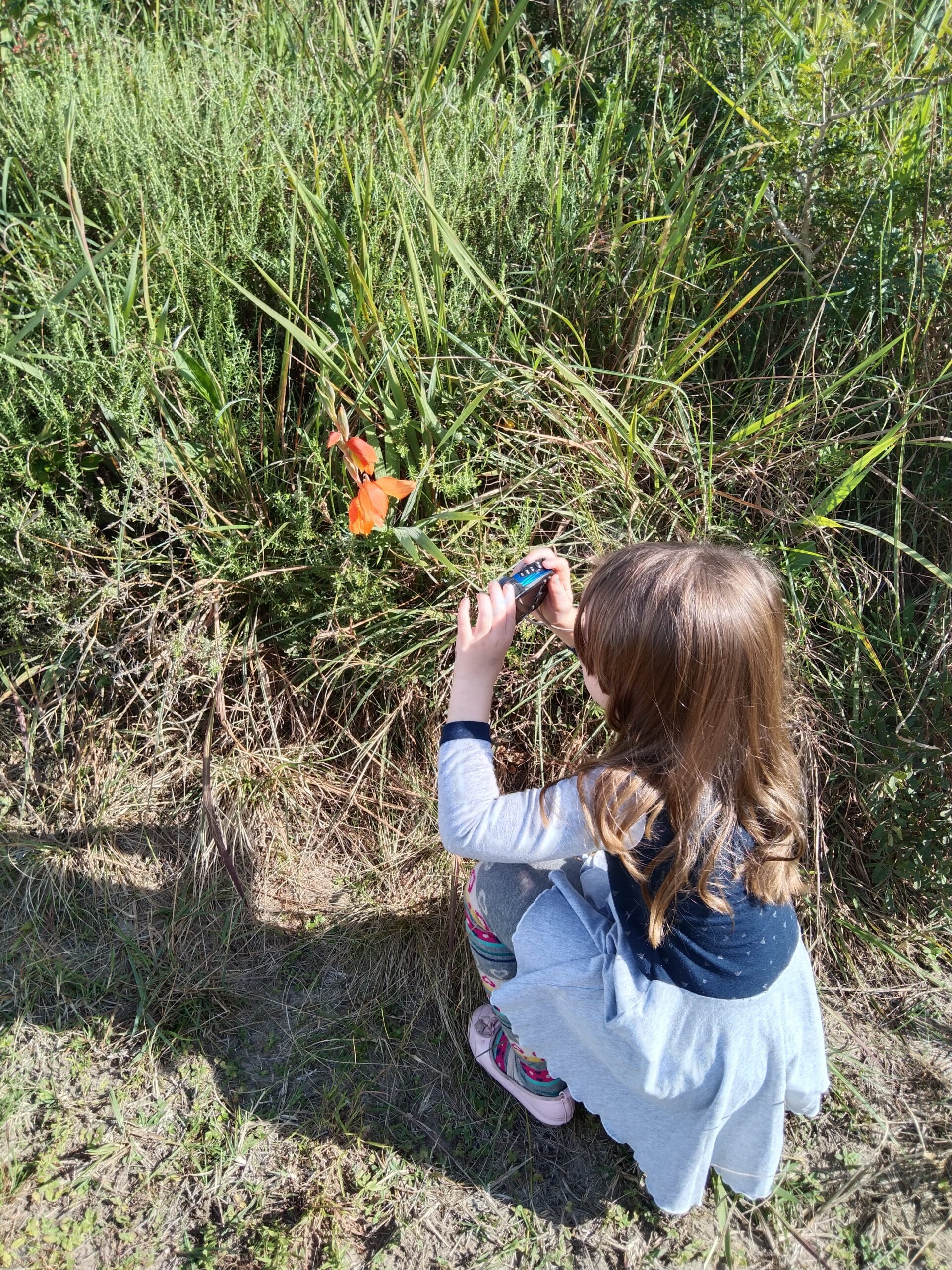
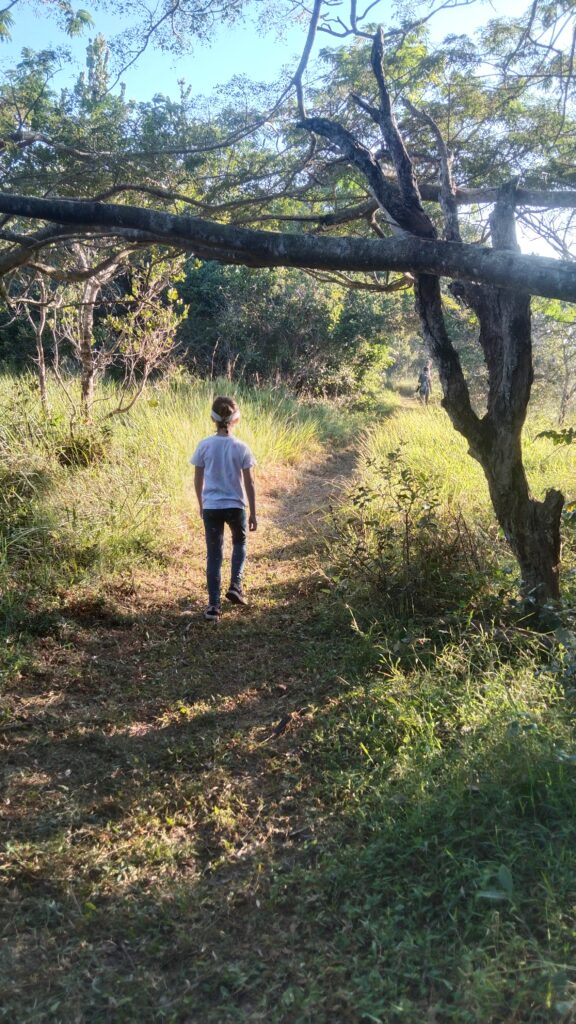
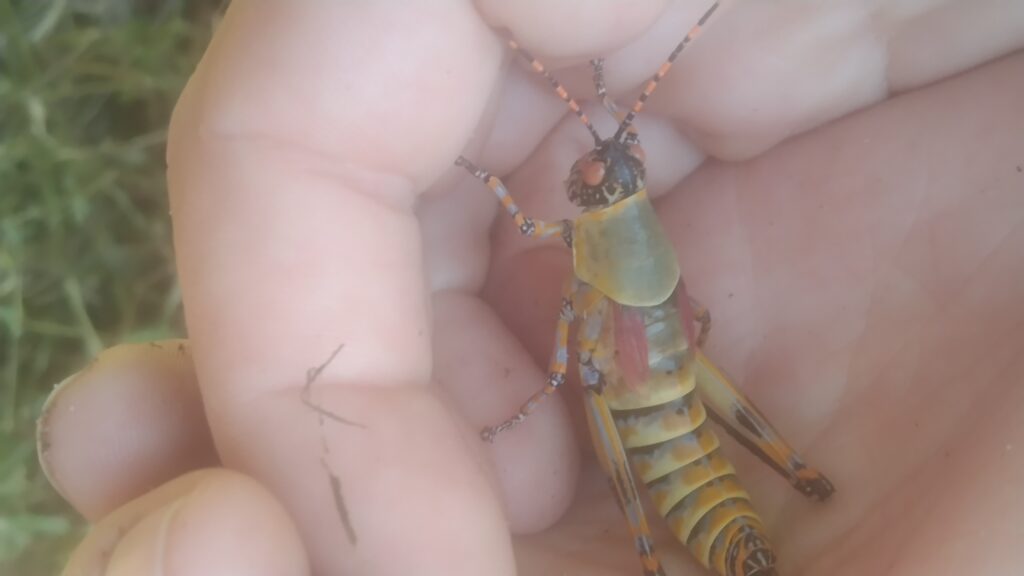
The walk took about two hours and covered a stretch of the iSimangaliso Wetland Park edge near St Lucia town. The children set off immediately, photographing everything in sight — flowers, grasses, insects on leaves, waterbirds from the path. There is something about giving a child a phone with a purpose that changes everything. They were not passively walking. They were hunting, documenting, contributing.
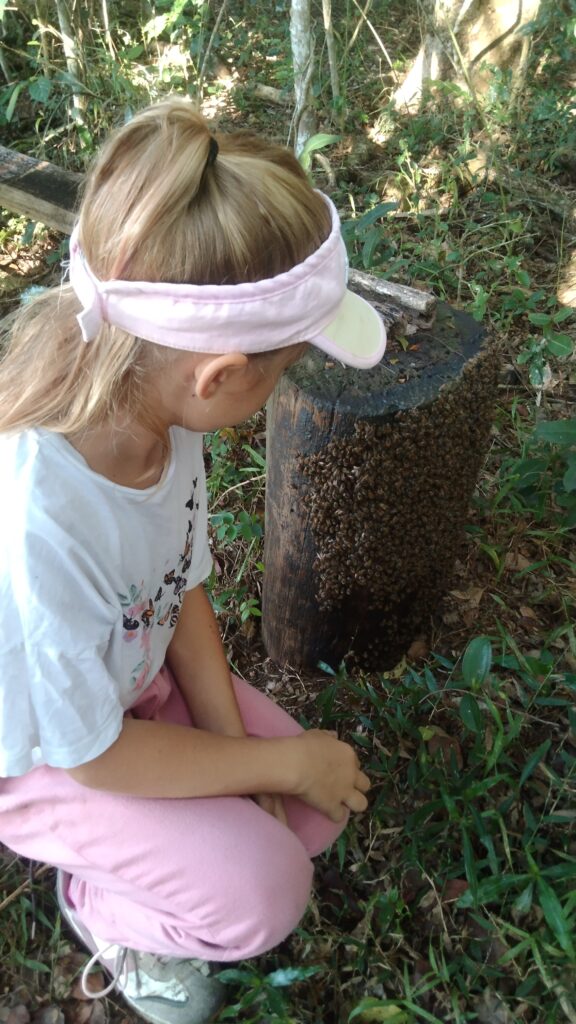
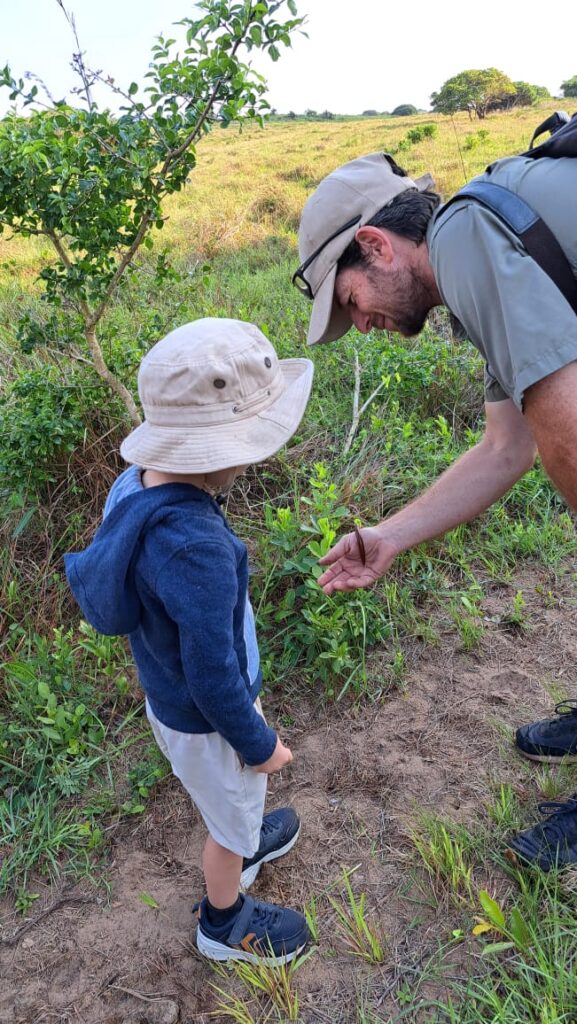
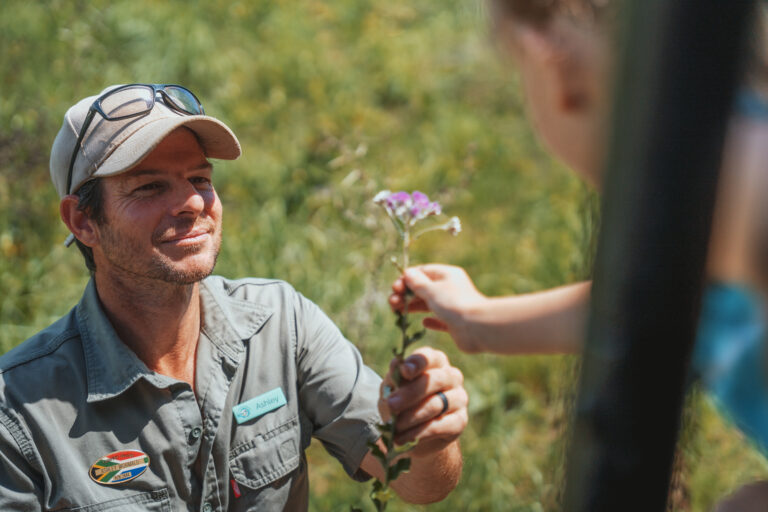
We found frogs and toads in the damp areas near the water, water lilies in full bloom, several bird species, and one of the morning’s most talked-about sightings: a cluster of bees working a damp patch on a tree trunk in a way nobody in the group had seen before. Ashley stopped the group and gave one of his bush talks — the kind where adults and children alike go quiet and lean in. Those moments are the ones that stay.
By the end of the walk the children had documented dozens of species. They were buzzing. And I will be honest with you – having two hours on a long weekend morning where the children were completely absorbed, learning, contributing to something real, and entertained without a screen in sight – that is not nothing. That is a gift.
This is exactly why local nature initiatives for kids are so powerful. And make you feel like a good parent at the same time!
Why Local Nature Initiatives Matter for Children
There is a growing body of research showing that children who spend regular time in nature develop stronger attention spans, lower anxiety levels, and a more deeply embedded sense of environmental responsibility. But beyond the science, there is something simpler at work: children who learn to notice the natural world around them become adults who want to protect it.
The City Nature Challenge works because it gives children a role. They are not tourists in nature — they are participants. They have a job. Their photographs are going somewhere. Someone is going to look at what they found and it is going to count.
This is exactly what the Wild Wisdom philosophy at Kate on Safari is built around. Not nature as a destination, but nature as a practice — something you do, regularly, wherever you are.
If you want to bring this kind of wild learning into your family’s everyday life not just on special mornings but every day, our free Safari Animal Mini Pack is a good place to start. Six pages of wildlife learning, straight to your inbox.
GET YOUR FREE SAFARI ANIMAL MINI PACK
Local Nature Initiatives for Kids Wherever You Are
This is the part I want to make sure lands. We live inside iSimangaliso Wetland Park, which makes us unusual. But the City Nature Challenge is genuinely accessible to everyone – it runs in cities, suburbs, small towns and rural areas across South Africa and around the world.
A garden is enough. A local park is enough. A verge with weeds and insects is enough. The iNaturalist app is free. The knowledge required is zero – you learn as you go, and the community teaches you.
Some ideas for wherever you are:
In a garden or small outdoor space – set a challenge to find and photograph 10 different living things before breakfast. Insects under logs, spiders in corners, birds on the fence. You will be surprised what is there.
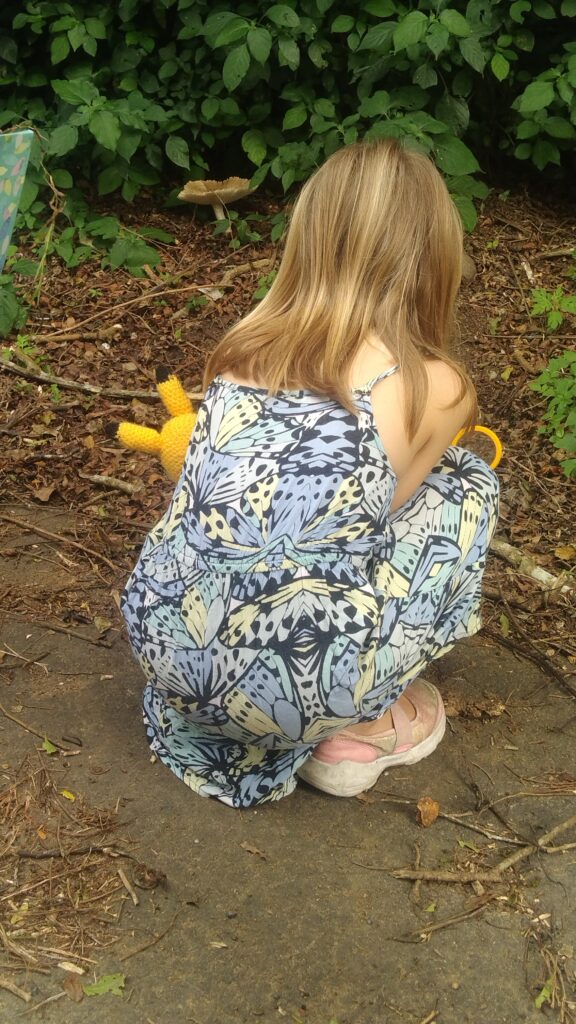
In a suburban park – download iNaturalist before you leave home, let your child be the photographer, and upload everything you find. Look at what others in your city are finding.
Near any body of water – wetlands, streams, dams and rivers are biodiversity hotspots. Even a drainage ditch can hold surprises. Frogs and dragonflies are among the most satisfying finds for children.
On the school run – trees along pavements, weeds growing in cracks, pigeons, starlings, hadedas. All of these are valid observations. All of them can be logged.
The goal is not perfection. The goal is attention.
How to Get Your Kids Involved in the City Nature Challenge
The City Nature Challenge runs every April. To participate:
- Download the iNaturalist app (free, available on iOS and Android)
- Create a free account
- Head outside during the observation period (usually four days in late April) and photograph any living thing you can find
- Upload your observations – the community will help you identify them
- During the identification period that follows, you can help identify other people’s observations too
Find more information and your nearest participating city at citynaturechallenge.org.
A Note on Ashley’s Bush Talks
One of the things that made this morning so memorable was having Ashley with us – and I am aware that not everyone has a conservation / wildlife guide in the family. But that is what guided experiences are for. If you are visiting St Lucia or the iSimangaliso Wetland Park, joining a guided walk with our sister company The Little Bush Baby Co, changes what you see and what you take home. Knowledge is contagious. One good bush talk from someone who loves what they do can plant something in a child that grows for decades.
The Takeaway
The City Nature Challenge is one of many local nature initiatives for kids that are free, accessible and genuinely meaningful. Platforms like iNaturalist, eBird for birds, and FrogMAP for amphibians in South Africa all allow families to contribute real data to real science – without any expertise, any equipment beyond a phone, and any budget whatsoever.
The question is not whether your child can access nature. It is whether you decide to make space for it.
This morning, on Freedom Day, twenty people in St Lucia made that decision. The bush did the rest.
Katie Wormald is a paediatric nurse, nature educator and co-founder of The Little Bush Baby Company, a conservation-focused safari experience based in St Lucia, iSimangaliso Wetland Park. Kate on Safari is her platform for bringing African wildlife and wild wisdom into family life — wherever in the world you are.
Explore more at kateonsafari.com
2 Comments