
Are We Raising a Generation Who Can’t Pay Attention? What the Research Says – and What You Can Do About It
By Katie Wormald | Kate on Safari | Wild Wisdom
When did your child last sit quietly and watch something for ten minutes without being asked to?
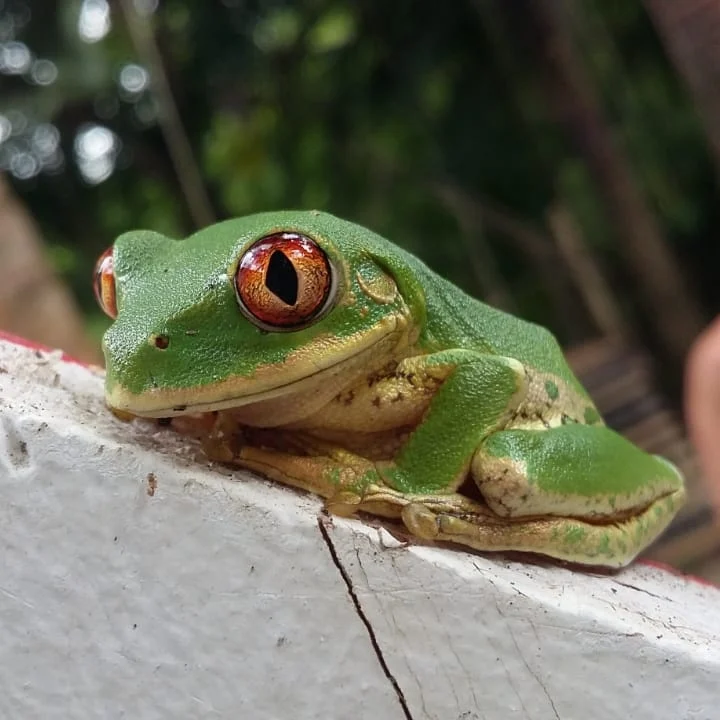
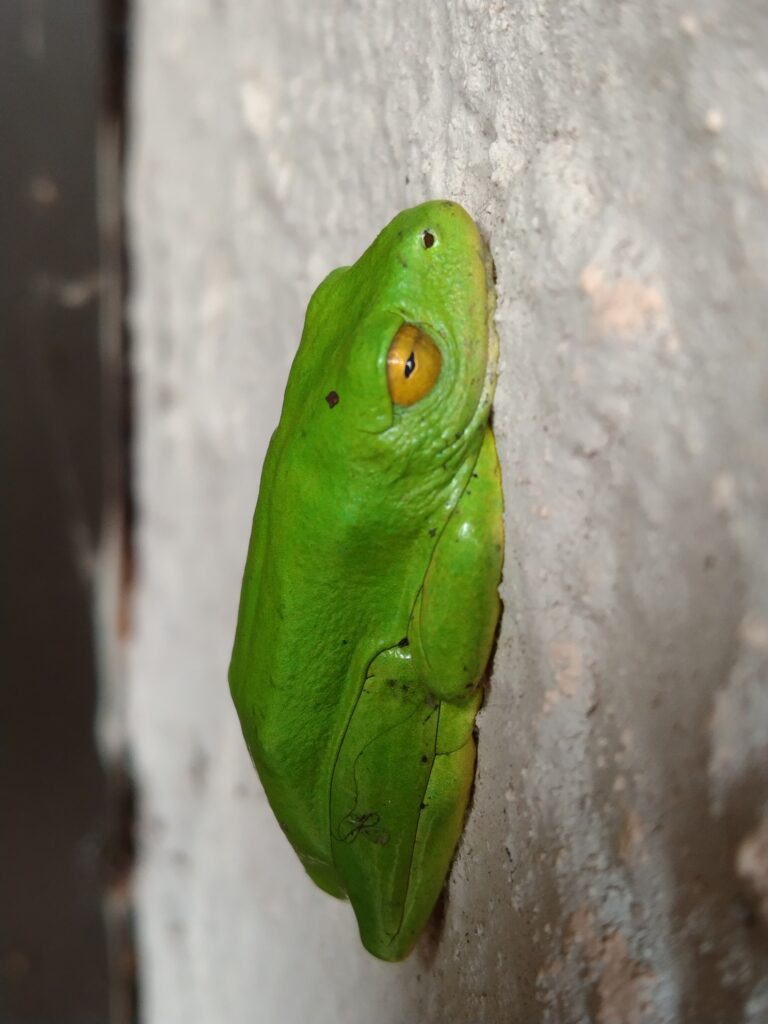
Not a screen. Not a video. Not something designed to hold their attention with noise and colour and constant movement. Just – something. A beetle. A bird. A frog. A spider building its web in the corner of the window.
Take a moment with that question – because the research on children’s attention spans and nature suggests the answer matters more than most parents realise. For most parents reading this, the honest answer is either “I can’t remember” or “never, actually.” Including me for my third child! I can see the difference between her and my older two, she never had the same level of small attention holding activities simply because we are a busy family of 5.
This is not a criticism of your child or your parenting. But it is worth paying attention to – because the research suggests something significant is happening to children’s ability to focus. And the good news, which I want to be clear about from the start, is that attention is not a fixed trait. It is a skill. And like any skill, it can be built and learned. The relationship between children’s attention spans and nature is, it turns out, one of the most well researched areas in environmental psychology – and the findings have real implications for every family, wherever they live.
I spent 14 years in clinical practice as a paediatric nurse, nurse specialist and health visitor. I have watched children develop across a wide range of environments, abilities and challenges. And I want to offer you something more useful than alarm – I want to offer you a framework, backed by evidence, for understanding what is happening and what you can actually do about it.
What the Research Actually Shows
The evidence on children’s attention spans and nature is substantial – and it comes from some of the peer-reviewed journals, not lifestyle websites.
Children who have the highest screen exposure during the early years show the greatest reductions in their capacity for sustained attention – precisely because the early years are when the neural architecture for attention is being established. The habits and environments of those years shape the attention system a child carries into adolescence and adulthood. (Frontiers in Psychology, 2018)
Children who spend regular time in natural environments show measurable improvements in directed attention compared to equivalent time in built or screen-heavy environments. Not because nature is calm – it frequently isn’t – but because of what researchers call “soft fascination”: the effortless, gently absorbing quality of the natural world that allows the brain’s attention system to recover rather than continuing to deplete. (PMC, 2019)
This recovery effect is the foundation of Attention Restoration Theory, one of the most consistently supported frameworks in environmental psychology. The theory proposes that our capacity for directed attention – the focused, effortful concentration required for tasks – is finite. Screens offer no recovery because they demand that same depleted system to keep working. Nature restores it. (Journal of Environmental Psychology, 1995)
Across 56 studies involving children and adolescents, nature exposure showed consistent positive effects on attention and executive functioning – the cognitive skills that underpin focus, impulse control and the ability to stay with a task. (Journal of Environmental Psychology, 2024)
Perhaps most striking is the emerging neurological evidence. Children with regular access to green environments show greater grey matter volume in the prefrontal cortex – the brain region responsible for attention, working memory and cognitive control. Regular time in nature does not just restore attention temporarily. It appears to support the physical development of the brain structures that underpin sustained attention over the long term. (ScienceDirect, 2025)
This is not a lifestyle opinion or a parenting trend. It is a growing and consistent body of evidence pointing clearly toward one conclusion: the environments we give children matter enormously – not just for their happiness, but for the development of their capacity to engage with the world.
But Here Is What the Research Cannot Tell You
The research tells us that attention is under pressure. The evidence on children’s attention spans and nature does not tell us that all children are equally affected, or that the situation is irreversible. Neither does it suggest that the solution is simply to remove screens.
Some children – particularly those with ADHD, sensory processing differences, or other neuro-divergent profiles – have always found sustained attention genuinely difficult, long before smartphones existed. For these children, the conversation is more complex and more nuanced than “too much screen time.” If you are parenting a neuro-divergent child, I want to acknowledge explicitly that this post is not directed as a criticism in any shape or form. I will be writing a dedicated piece on neuro-divergent children and nature in the coming weeks – because that topic deserves its own consideration.
What I want to address here is the broader picture: that for many children, attention difficulties are not fixed, not inevitable, and not a character flaw. They are the result of an environment that has not given attention the conditions it needs to develop – and that can be changed.
Attention Is a Skill – Not a Personality Trait
This is the reframe I want every parent reading this to hold onto.
Attention span is not something children simply have or don’t have. It is a capacity that develops with practice – exactly like physical fitness, or reading fluency, or the ability to swim. A child who has never been asked to sustain focus on one thing for more than thirty seconds will find two minutes genuinely difficult. But a child who practises thirty seconds, then one minute, then two minutes, then five – that child is building something real and lasting.
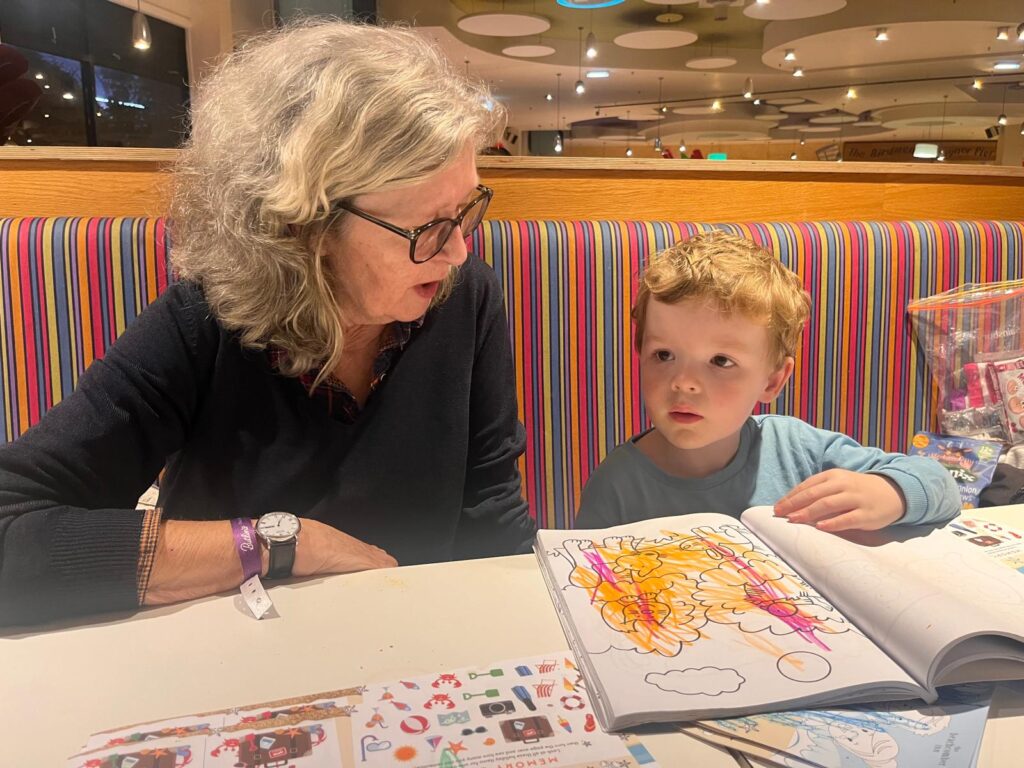
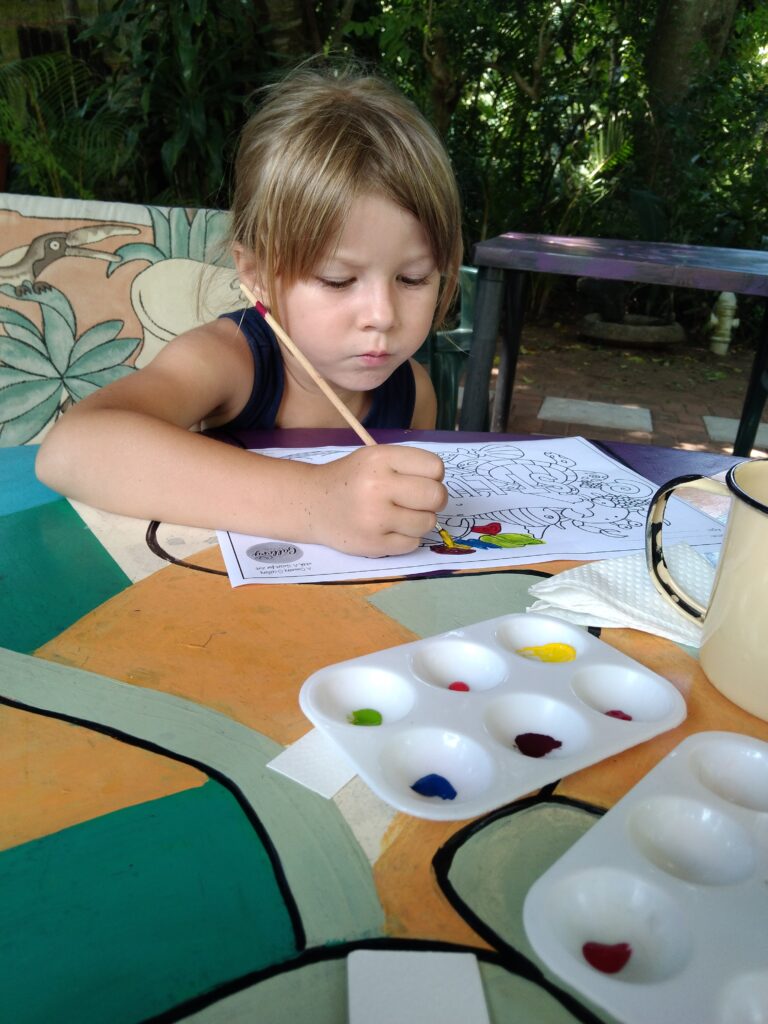
I worked deliberately on this with my own children. Not through structured exercises or reward charts – but through small, consistent, daily practices that asked them to stay with something a little longer each time. Reading a page, then two pages, then a chapter. Watching an animal move until it disappeared, rather than looking away when nothing happened. Finishing an activity before starting another one. Using animal colouring books and finishing a whole picture before moving on to the next one. Sitting with a question rather than immediately Googling the answer.
Those children can now sit through a full film. They can read for an hour. They can watch a chameleon move along a branch for ten minutes without speaking. That did not happen by accident. It happened because we treated attention like a muscle and gave it regular, low-pressure exercise.
Understanding the link between children’s attention spans and nature is the first step – the second is doing something consistent about it.
Why Nature Is Particularly Effective for Building Attention
The research on children’s attention spans and nature is clear – but why does nature work so effectively as an attention-building environment?
Kaplan’s Attention Restoration Theory proposes that natural environments restore our capacity for directed attention through four key properties:
- extent – the sense of feeling immersed in an environment;
- being away – an escape from habitual demands;
- soft fascination – aspects that capture attention effortlessly without cognitive effort;
- compatibility – the environment aligns with what the individual needs.
Together these properties allow the brain’s attention system to recover rather than continuing to deplete. (Journal of Environmental Psychology, 1995)
Children, in my experience, meet all four conditions naturally in outdoor environments. The natural world is inherently fascinating to them – not because it is loud or fast or stimulating in the way screens are, but because it is unpredictable. Something might happen. The beetle might fly. The bird might land closer. The ant might do something extraordinary.
That quality of expectant, patient attention – watching carefully because something might happen – is exactly the attention muscle we are trying to build. And nature provides a motivating, naturally rewarding context for building it in a way that worksheets and screen-free rules never quite manage.
Furthermore, because nature moves at its own pace and cannot be fast-forwarded, it requires children to practise the specific skill that screens have made rare: waiting without stimulation. That waiting, uncomfortable as it can feel at first, is where the attention system grows.
Building Attention Through Nature – A Progressive Approach
Everything we know about children’s attention spans and nature points to one thing – consistency matters more than intensity. The key word here is progressive.
We are not asking a child who struggles to focus for thirty seconds to sit quietly in the bush for an hour. We are starting where they are and building from there – exactly as you would with any physical conditioning programme.
Every practical suggestion below is grounded in what the research on children’s attention spans and nature tells us actually works.
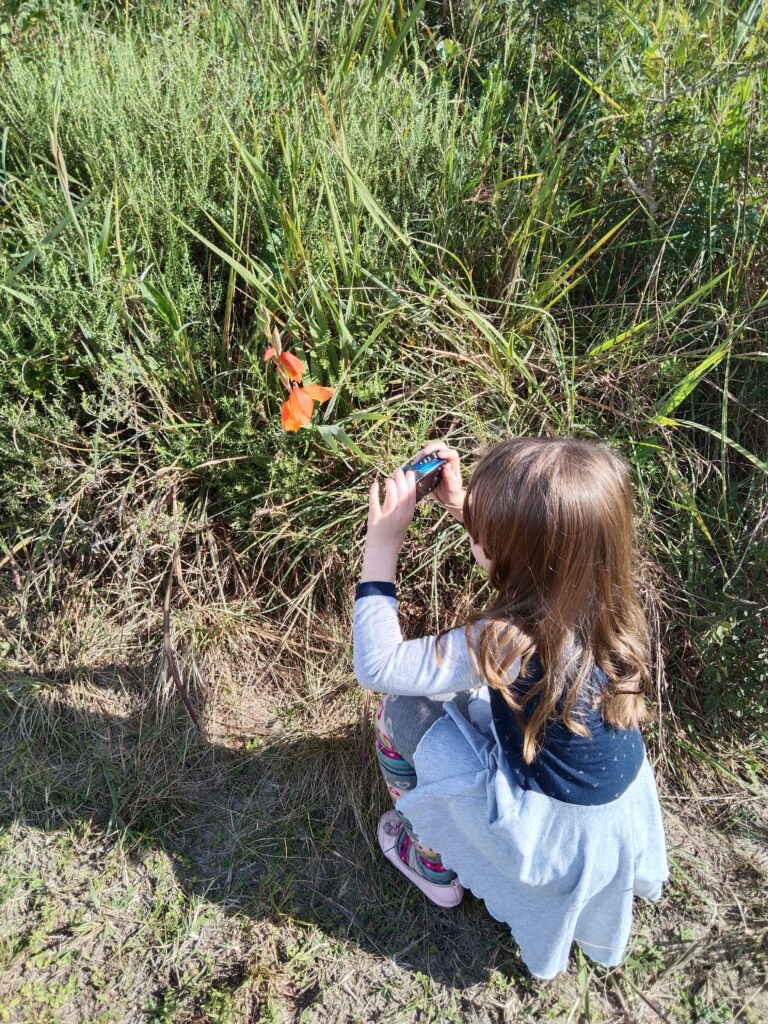
Start with seconds, not minutes. Ask your child to watch one thing – an ant, a spider, a bird on a fence – for as long as they can. Don’t set a timer visibly. Just watch alongside them and when their attention breaks, note how long it lasted. The next time, see if they can manage a few seconds longer. Celebrate the extension, however small.
Ask questions after, not during. Interrupting a child’s attention to ask what they’re noticing breaks the very thing you’re trying to build. Let them watch. Ask questions afterwards – what did you notice? Did anything surprise you? What do you think it was doing? Those questions deepen the experience and make them want to watch more carefully next time.
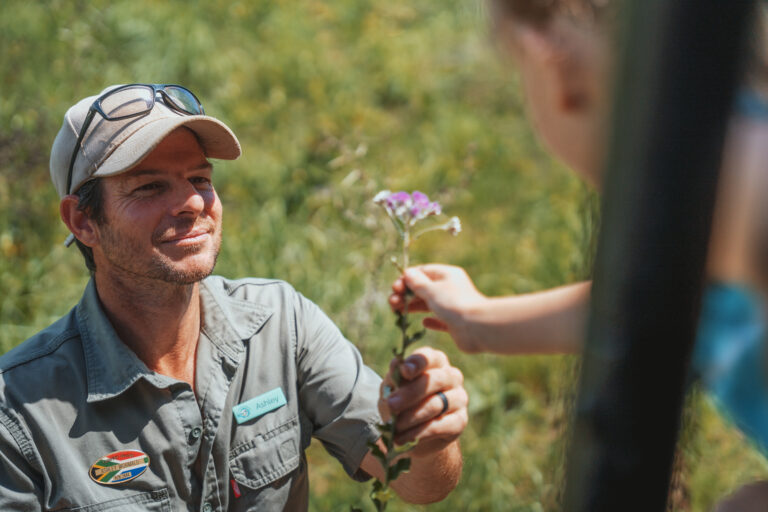
Follow their interest, not yours. A child who is fascinated by beetles will sustain attention on a beetle far longer than on a bird you find more interesting. The subject matter is less important than the practice of staying with it. Let them lead.
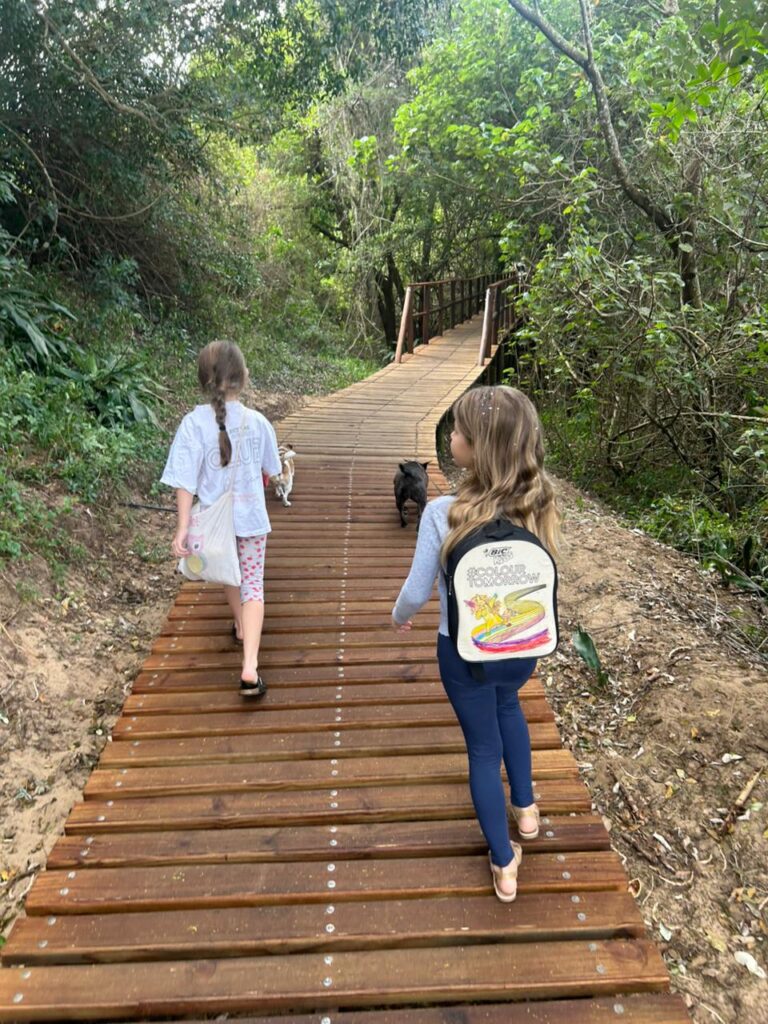
Build rituals, not events. A ten-minute walk around the block every morning before school (or on the walk to school), consistently, builds more attentional capacity over time than an occasional grand nature day out. Consistency is the conditioning principle here – regular, low-stakes practice rather than high-effort special occasions.
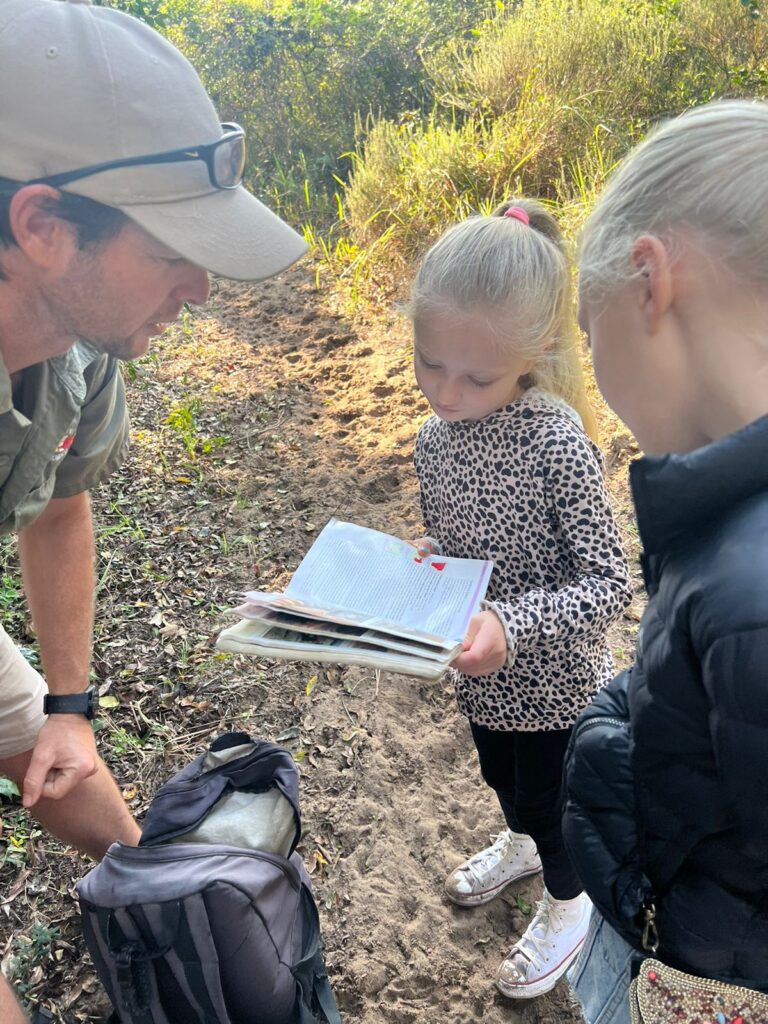
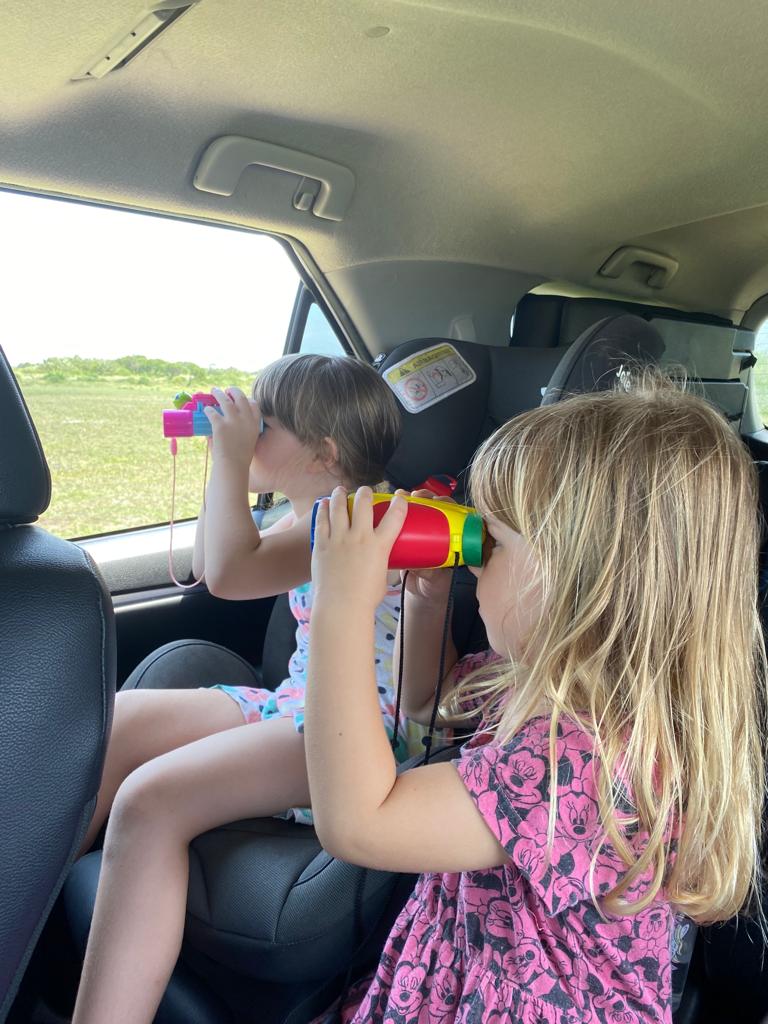
Use tools that extend attention naturally. A simple field guide, a nature journal, the iNaturalist app – any tool that gives a child a reason to look more carefully and for longer transforms passive watching into active noticing. The act of trying to identify something, to draw it accurately, to record it properly, extends attention span naturally and purposefully.
Read together, regularly. Books build attention span in a way that is directly transferable to nature observation – both require the child to stay with something slow-moving, to hold a narrative in mind, to wait for what happens next. A child who is read to every day is practising sustained attention every day.
A Note on Neurodivergent Children
I want to be clear that the progressive approach above applies to all children – including those with ADHD, autism, sensory processing differences and other neurodivergent profiles. The connection between children’s attention spans and nature applies across all profiles – the starting point simply looks different for every child.
For some children we are genuinely starting with two or three seconds of sustained focus – but the principle is the same. Small extensions, consistent practice, questions after rather than during, following the child’s own fascination.
In fact, nature can be particularly powerful for neuro-divergent children for reasons that go beyond attention training – and I will be exploring that in a dedicated post in the coming weeks. If this is your family’s experience, watch this space.
For families planning a trip, our educational safari for kids guide covers how to make the experience work for every child.
What This Looks Like in Practice
In our house, nature attention-building is not a structured programme. It is the texture of daily life.
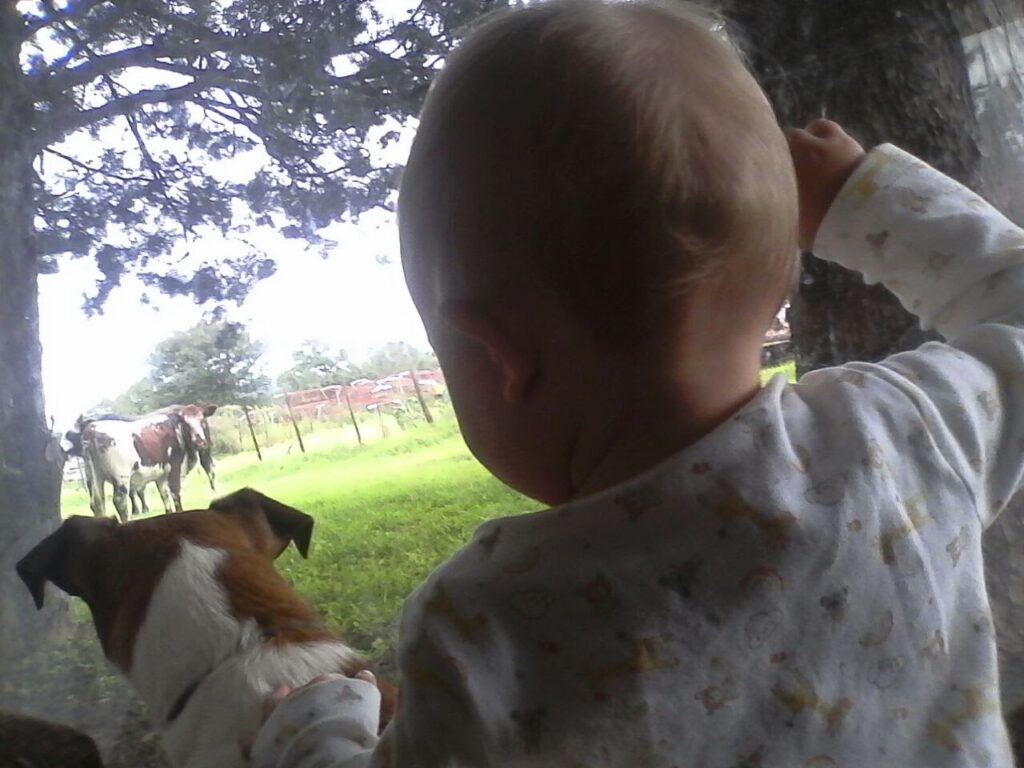
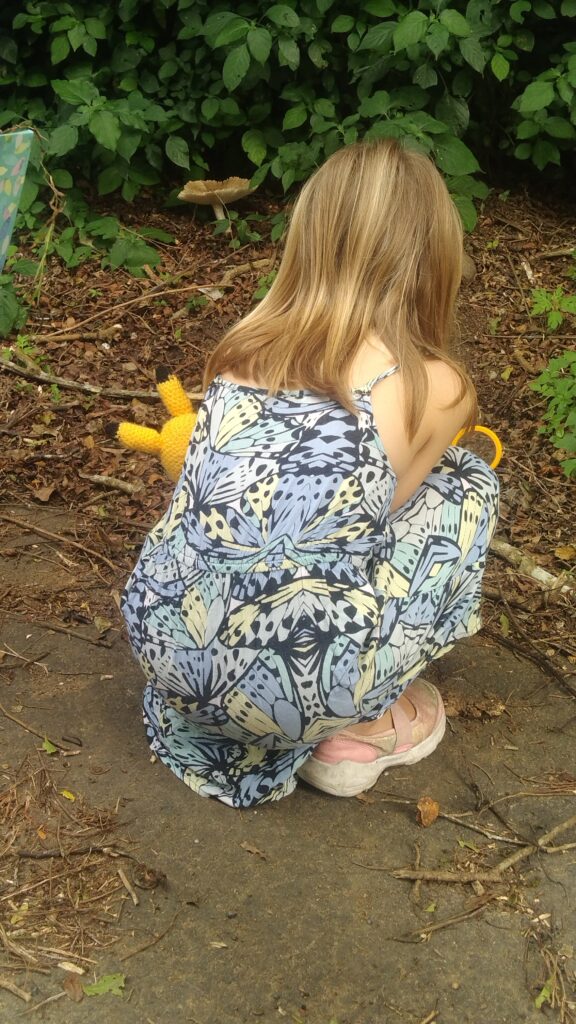
Guinea fowl dust bathe on our lawn most mornings. My children have watched this hundreds of times. And they still stop, still look, still occasionally crouch down to watch more closely. Not because I ask them to. Because the habit of paying attention to living things has become, over years of gentle practice, simply how they move through the world.
That is what we are building. Not children who can sit still on demand – but children who find the living world genuinely interesting and have the attentional capacity to stay with that interest long enough for it to become something deeper.
Wherever you are – a garden, a park, a city pavement – the same practice is available to you. The subject matter doesn’t matter. The consistency does. As I explored in my post on screen free nature activities for kids, consistency matters more than grand gestures.
This is precisely why children’s attention spans and nature are so deeply connected – nature provides the ideal training ground because it is inherently motivating, unpredictable and completely impossible to fast-forward.
Bring the Natural World Into Your Family’s Every Day
If you want to put everything you now know about children’s attention spans and nature into practice, our free Safari Animal Mini Pack is a good place to start – six pages of wildlife learning designed for curious children wherever they are in the world.
GET YOUR FREE SAFARI ANIMAL MINI PACK
And for families who want to go deeper our Safari Animal Fact Card Set brings ten of Africa’s most iconic animals into your home, your kitchen table and your nature journals – each one a starting point for the kind of patient, curious attention we have been talking about.
SHOP THE SAFARI ANIMAL FACT CARD SET
A Final Thought
The research on children’s attention spans and nature is clear attention is not lost. It is simply out of practice.
The child who cannot watch a beetle for thirty seconds today can, with consistent and patient practice, watch a leopard for twenty minutes in a year’s time. I have seen it happen. I have helped make it happen with my own children.
It starts small. It starts outside. And it starts with the decision to treat attention as something worth building – because it is an important skill for children to have.
Let Africa teach your children what the world is made of.
Written by Katie Wormald – paediatric nurse, nurse specialist, health visitor and founder of Kate on Safari. Katie lives in KwaZulu-Natal, South Africa on the edge of iSimangaliso Wetland Park.

One Comment