Safari with a Neurodivergent Child – Your Honest Questions Answered
By Katie Wormald | Kate on Safari | Wild Wisdom
Safari for neurodivergent children is something almost nobody in the tourism industry talks about honestly.
So, I recently asked a group of parents of neurodivergent children one simple question: what would stop you from taking your child on safari?
One answer made me laugh out loud – and then think very carefully.
“For me it would be the safety of the kids and the animals. Like, would my very noisy ADHD kids scare the animals? Would the very noisy jungle animals scare the kids? And also – how likely is it they will be eaten? On a scale of 1 to 100, the closer to 100 the more likely I would book.”
I want to address every single one of those questions honestly – because safari for neurodivergent children deserves a real answer, not a sanitised brochure version. Including the being eaten one.
But first – and I mean this sincerely – if you are a parent of a neurodivergent child who has quietly filed “safari” under “things that are probably not for us,” I want you to read this post carefully. Because I think you might be wrong. And I think the bush might surprise you both.
Will My Noisy Child Scare the Animals?
Honestly? Possibly, sometimes, a little.
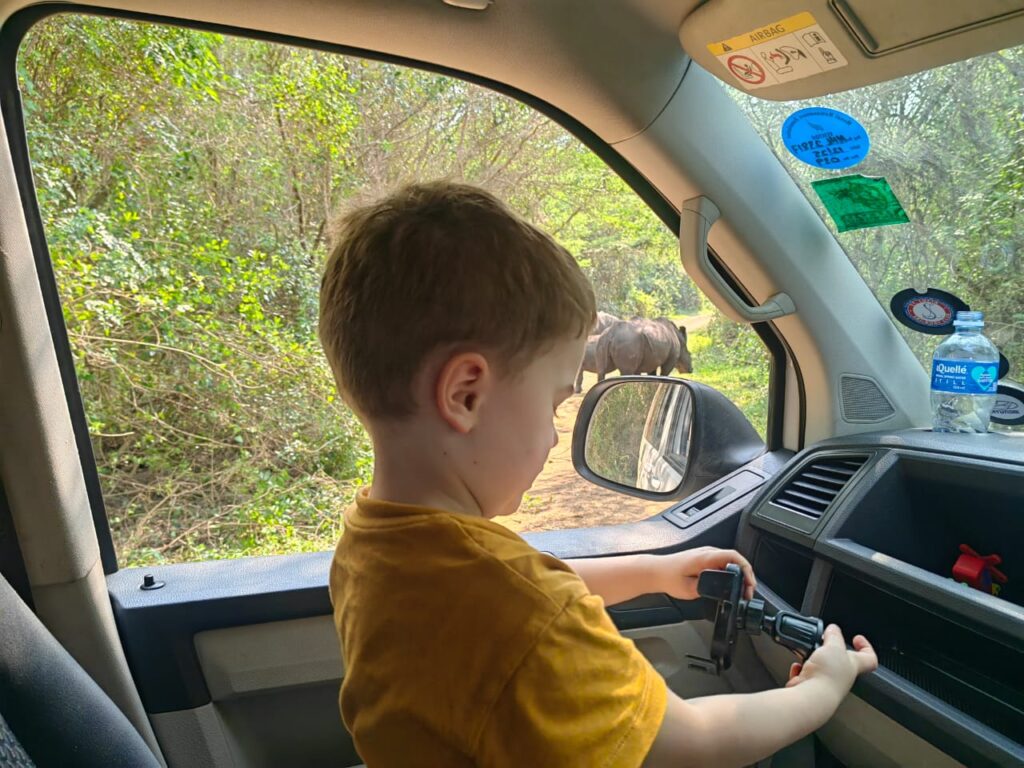
But here is the context that matters: African wildlife has been living alongside noisy, unpredictable things for millions of years. A child who shouts with excitement when a giraffe appears is not, in the experience of any guide I know, a significant threat to the wildlife. Animals habituated to vehicles – which is what you will encounter in any established reserve – are used to the sounds, the smells and the general unpredictability of humans in close proximity.
The animals that are most likely to move away from noise are also the animals that are most likely to move away from anything – skittish antelope, small birds, the more nervous prey species. The animals that most children most want to see – elephants, lions, rhino, hippo, giraffe – are generally far less bothered by a child’s excitement than most parents expect.
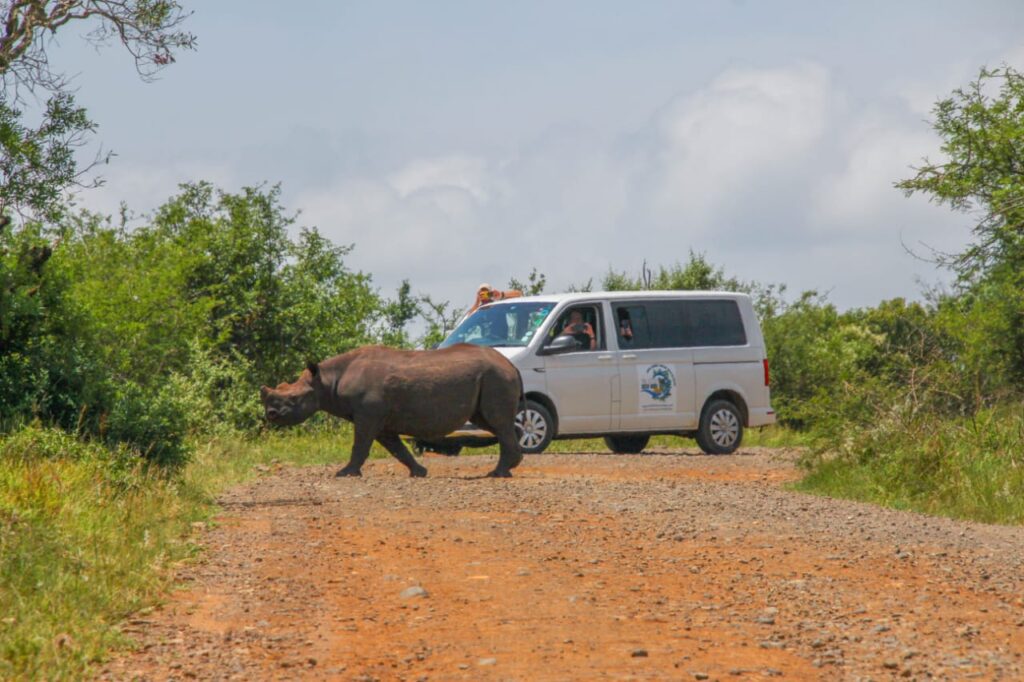
What your guide will help you with is reading the situation. At a sensitive sighting – a lion with cubs, a rhino that is moving toward the vehicle – a good guide will signal quietly for calm and explain why. Most children, even children who find sustained stillness genuinely difficult, can manage thirty seconds of quiet when the reason is real and immediate and standing twelve metres away. Alternatively they will close all the windows and keep a safe distance away.
This is one of the most common concerns parents raise when considering safari for neurodivergent children – and one of the easiest to put to rest.
Will the Animals Scare My Child?
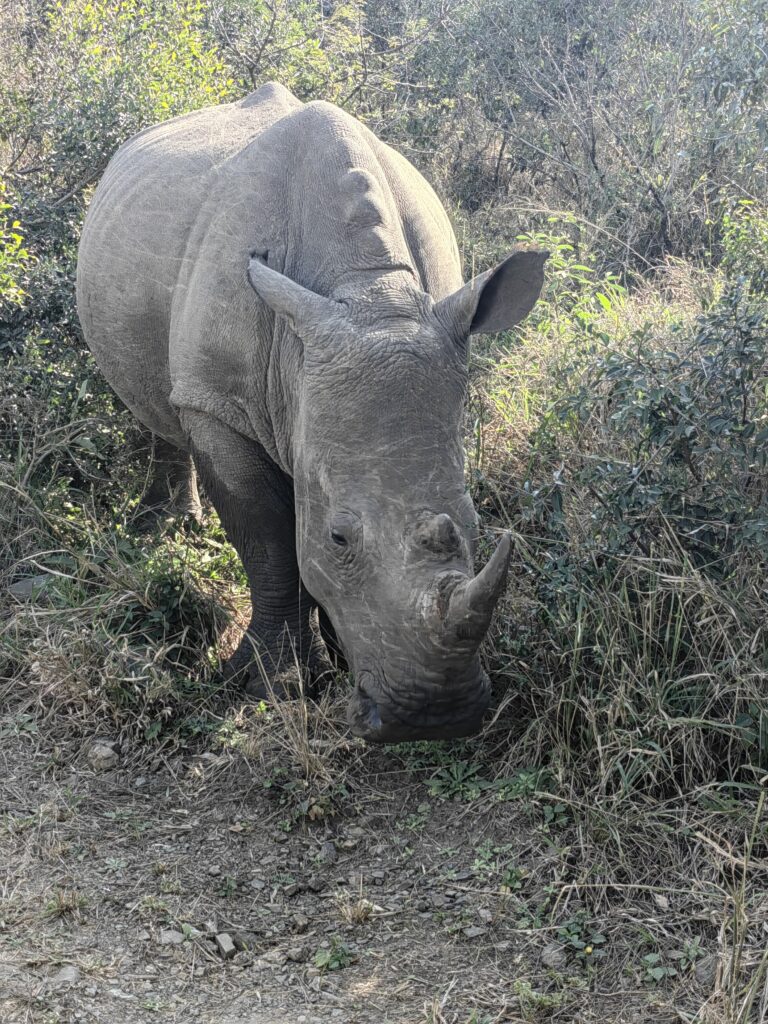
This is a more complex question – and a more important one.
For some neurodivergent children, particularly those with sensory processing differences or anxiety, the unexpected sounds and scale of the African bush can be genuinely overwhelming. The sudden alarm call of a francolin. The sound of an elephant moving through dense bush before you can see it. The smell of a lion that hits you before you round the corner.
For other neurodivergent children – particularly those with ADHD or autism – these same sensory inputs can be regulating rather than overwhelming. The bush operates on a frequency that is different in character from the sensory chaos of a classroom or a shopping centre. It is rich but not relentless. It is unpredictable but not aggressive. Many neurodivergent children find, to their parents’ considerable surprise, that they are calmer in the bush than almost anywhere else.
The honest answer is that you know your child better than any guide or any blog post. If your child has significant sensory sensitivities, a private closed vehicle safari – where the environment can be controlled, the windows adjusted, the pace set entirely around your child – is the right starting point. If your child tends toward hyperfocus and craves intense sensory input, an open vehicle may be extraordinary for them.
What I would say to any parent uncertain about this: start small. A shorter drive, a private vehicle, a guide who has been briefed on your child’s needs. See how they respond. You may be genuinely surprised. This is where safari for neurodivergent children gets genuinely interesting – because the bush often surprises both parent and child.
How Likely Is It They Will Be Eaten?
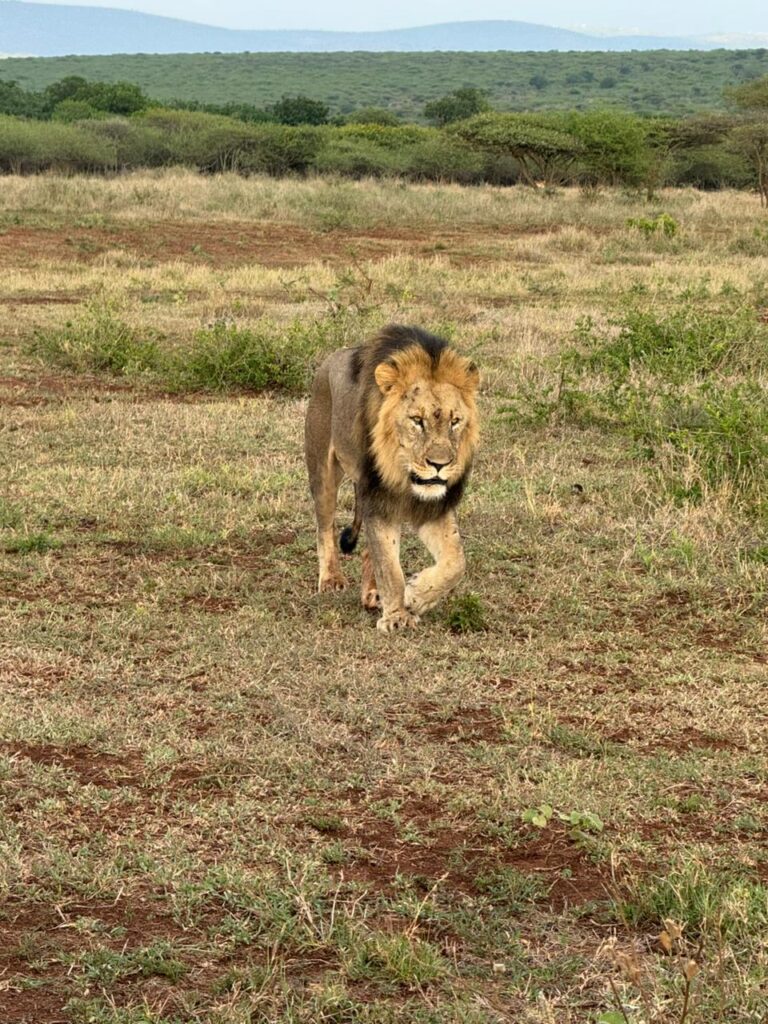
On that parent’s scale of 1 to 100 – somewhere around 2.
And I want to be clear: we do not recommend feeding your children to the lions, however tempting that may feel after a particularly long day. (We have been there. We understand the temptation. We still do not recommend it.)
Safari in a vehicle – open or closed – is genuinely safe. You are not walking through the bush unaccompanied. You are in a vehicle with a qualified guide who knows the animals, knows the reserve, and knows exactly how close is too close. Children are not in danger on a properly guided safari. They are, in most respects, safer than they are in a car on the motorway.
The risks that do exist – and I say this as someone with 14 years of clinical experience who also lives on the edge of a game reserve – are managed by good guiding, good judgement and sensible behaviour in the vehicle. Your guide will tell you what you need to know. Listen to them.
Safari for neurodivergent children is, in this respect, no different to safari for any other child – the vehicle is your safe space and your guide is your expert.
Why the Bush Is Actually One of the Best Environments for Neurodivergent Children
Here is what most people don’t expect when they start thinking about safari for neurodivergent children.
The African bush removes almost every social demand that exhausts neurodivergent children in daily life.
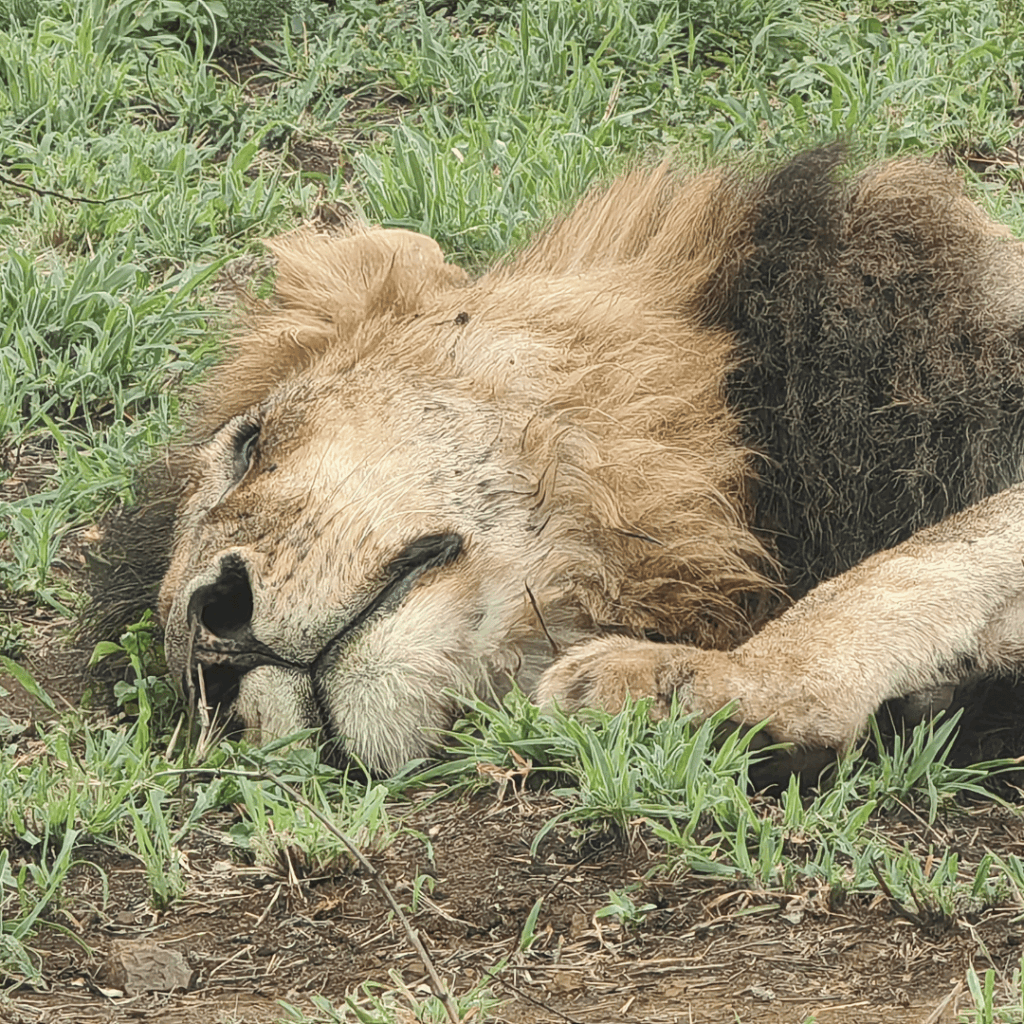
There is no eye contact required. There are no social scripts to follow, no classroom dynamics to navigate, no performance expected. Nobody is watching how your child sits or whether they are paying attention in the right way or responding appropriately to what the teacher is saying. The bush does not care about any of that. It only asks one thing – that you look.
For autistic children, this absence of social pressure can be profoundly releasing. I have seen children who are described by their parents as “impossible in group situations” sit in complete absorbed silence watching an elephant herd for twenty minutes. Not because anyone asked them to. Because the elephant was more interesting than any social demand they have ever been asked to meet. This is one of the most consistently observed benefits of safari for neurodivergent children – the absence of social demand.
For children with ADHD, the bush offers something that almost no other environment provides – a legitimate reason to move their attention constantly. Every sound is worth investigating. Every movement in the grass is worth tracking. The hyperfocus that makes a classroom impossible makes a game drive extraordinary. A child who cannot sit still for ten minutes of maths can spend two hours identifying every bird call they hear, because every bird call might mean something is happening. Safari for neurodivergent children with ADHD is, in this sense, one of the most naturally accommodating experiences available.
For children with sensory processing differences, the bush offers a particular quality of sensory input that is rich but rhythmic – the sounds build and recede naturally, the smells are complex but not artificial, the visual landscape changes slowly rather than flickering. Many find this is deeply satisfying. Getting this balance right is key to making safari for neurodivergent children genuinely successful. For children who are sensory-sensitive, a closed private vehicle with controlled windows gives you the ability to manage the input carefully.
In 14 years of clinical practice I observed consistently that children who struggled most in structured, socially demanding environments often found something in natural settings that those environments never gave them. Space. Acceptance. A reason to pay attention that felt genuinely worth it.
The bush, I believe, offers all three in abundance.
What About Attention Span
Attention span is perhaps the most common practical concern parents raise about safari for neurodivergent children.
“My child can’t sit still for two minutes. How will they manage for hours in a vehicle?”
The answer is: they probably won’t – and they don’t have to.
A well-designed family safari is not two hours of sitting still and being quiet. It is two hours of looking, pointing, asking, snacking, fidgeting between sightings, arguing about whether that was a mongoose or a genet, falling asleep on the back seat when it gets warm, and waking up just in time to see the elephant cross the road in front of you.
The attention that safari asks of children is not sustained, directed, school-style attention. It is intermittent, interest-led, naturally rewarded attention. The sighting comes. The child focuses completely. The sighting passes. The child relaxes, moves, snacks, talks. The next sighting comes.
That rhythm – focus, release, focus, release – is one that many neurodivergent children find far more manageable than the sustained directed attention that school demands of them all day.
Furthermore, as I explored in my post on children’s attention spans and nature, attention is a skill that can be built progressively. Safari is one of the most motivating environments in which to build it – because the reward for paying attention is always worth it.
How The Little Bush Baby Company Does It
At The Little Bush Baby Company in St Lucia, we have thought carefully about what safari for neurodivergent children actually needs to look like in practice.
For families with neurodivergent children, this matters enormously. Here is what that looks like in practice:
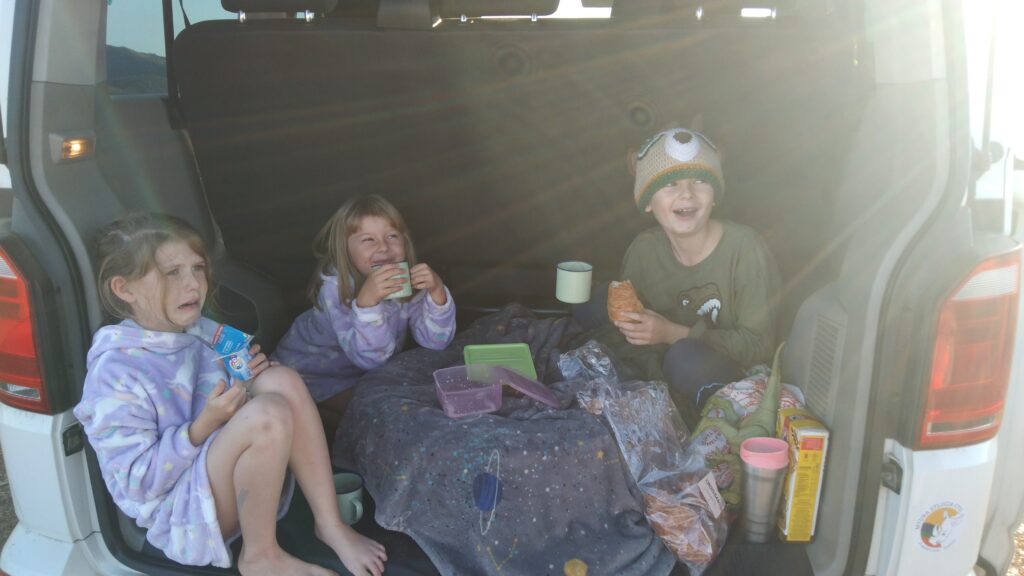
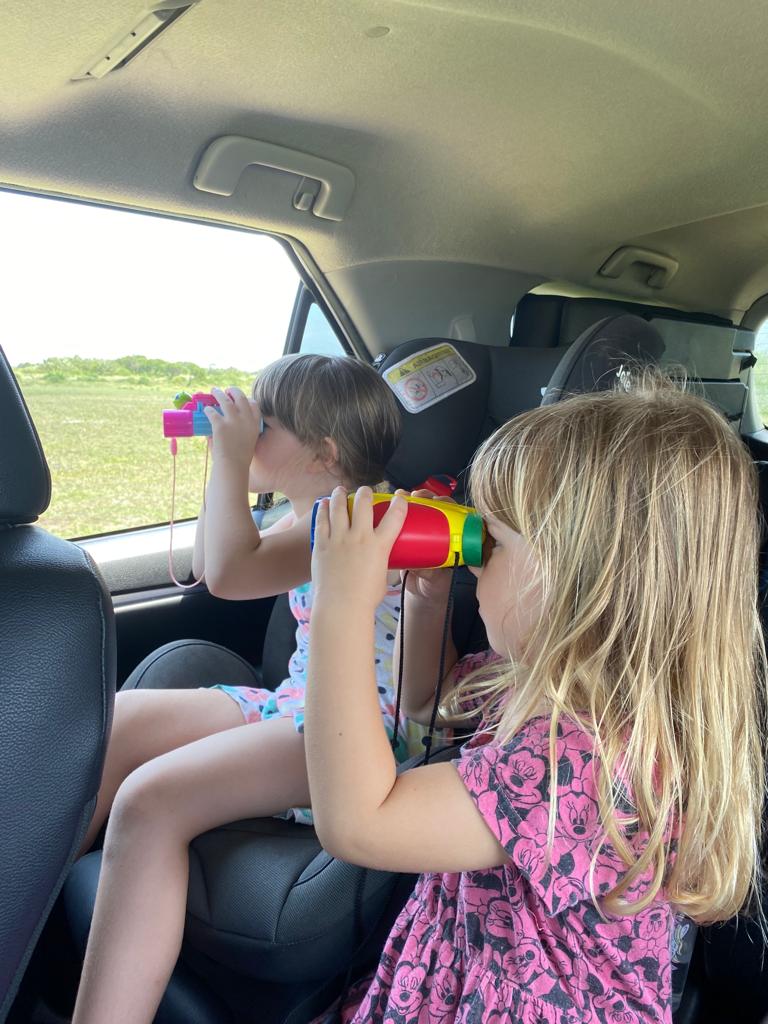
Every child gets a kit box. For younger children this includes building blocks, threading animals, toy animals, a colouring book and crayons. For older children it includes small water toys, books and a small Lego set — which they get to take home. Between sightings, in the quiet stretches, children have something to do with their hands that is calm and absorbing. The kit is adapted for age and need.
Every child gets a snack box. Included in the experience for children, it typically has fruit, juice, crisps, pretzels and a small treat. A child who is fed and comfortable is a child who can manage far more than a hungry, uncomfortable one. We ask about any food restrictions or allergies before the drive so we can make sure everything in the box works for your child.
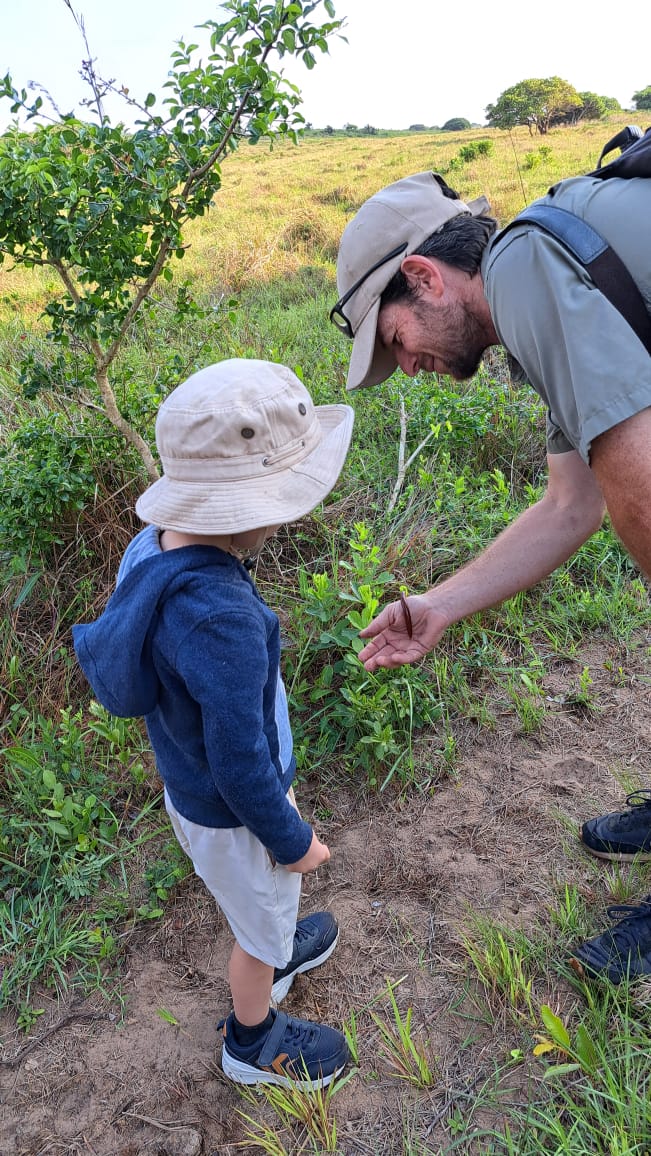
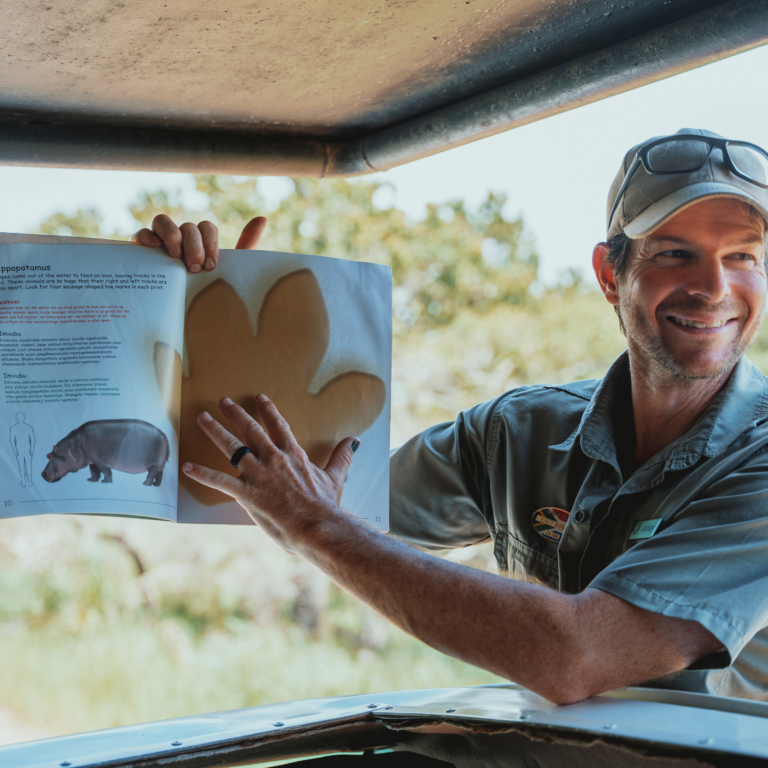
The route is genuinely flexible. Ashley and our guides are experienced at reading how a family is doing – not just what the animals are doing. If a child is struggling, the route adjusts. If a child is absorbed in something, we stay. Our guides are connected to local sighting networks so they always know where the animals are and can plan the drive around what will work best for the family in the vehicle that day.
We ask before we go. Not a clinical assessment – just a conversation. Is there anything we need to know? Any food restrictions, any specific needs, anything that would help us make the experience work better for your family? That conversation means your guide arrives prepared rather than discovering important information when it matters most.
If you are planning a visit to iSimangaliso Wetland Park, St Lucia or Hluhluwe-iMfolozi Park and want a family safari experience that is genuinely built around your child – whatever their needs – we would love to hear from you. Get in touch at thelittlebushbaby.com.
What Happens When Things Go Wrong
Safari for neurodivergent children requires honest planning for the moments that don’t go perfectly.
Let’s be honest about something that most safari operators never mention: sometimes things go wrong. A child becomes overwhelmed. A sensory input hits differently than expected. A meltdown happens in the vehicle, on a dirt track, twenty minutes from anywhere.
This is not a failure. It is parenting a neurodivergent child in a new environment. And it happens to the best families on the best days.
At The Little Bush Baby Company we have thought about this – because thinking about it in advance is what allows everyone to stay calm when it happens.
If a child becomes overwhelmed, the route changes. Immediately, without discussion, without making the child or the parent feel that they have ruined anything. Our guides read families throughout the drive and will often suggest a change of pace or direction before a parent has even identified that something is building. If you notice your child struggling, tell the guide. That is all you need to do.
If a child needs to stop, we stop. There is no schedule to keep, no other guests to consider, no pressure to push through. A private safari moves entirely at your family’s pace – and sometimes the right pace is parked under a tree with the engine off and everyone quiet for ten minutes.
If a meltdown happens, we support the parent, not the spectacle. Our guides understand that a meltdown is not bad behaviour – it is a nervous system in distress. Nobody will stare, nobody will judge, nobody will suggest that perhaps this was not a good idea. The experience adjusts around what the family needs in that moment, whether that means heading back, finding a quiet spot, or simply waiting it out together.
If the drive needs to end early, it ends early. No questions, no awkwardness, no feeling that you have wasted anyone’s time. The wellbeing of your child is the only metric that matters. You can always come back another day – and in our experience, families who have a difficult first experience and are supported well through it almost always do come back. Because the bush is worth it, and so is your child.
We would rather you told us everything before the drive than discovered it together in the field. The more we know, the better we can prepare – and the better the experience will be for your whole family.
Practical Tips for Planning a Safari with a Neurodivergent Child
Planning safari for neurodivergent children well in advance makes an enormous difference to how the experience unfolds.
Whether you visit us or plan a safari elsewhere, here is what I would tell any parent of a neurodivergent child who is considering the experience:
Choose private over shared, always. A shared vehicle puts your child in a social situation with strangers while asking them to be still and quiet. They are also at the mercy of fixed timings and other peoples needs. A private vehicle removes all of that and lets the experience be entirely about your family. For safari for neurodivergent children this is not a luxury – it is the single most important logistical decision you will make.
Choose closed vehicle for younger or more sensory-sensitive children. The ability to control temperature, sound levels and physical space makes an enormous difference. As I explored in our open vehicle safari for families post, closed does not mean lesser – it means comfort.
Brief your guide before you go. Safari for neurodivergent children works best when the guide knows what to expect before the drive begins. You do not need to hand over a medical file. Just tell them the important things – your child finds sustained stillness difficult, or your child is noise-sensitive, or your child will hyperfocus on birds and lose interest in mammals. A good guide will use that information well.
Start shorter than you think you need to. A two hour drive that ends well is infinitely more valuable than a four hour drive that ends in tears. You can always go again. Build up gradually – exactly as you would with any new experience for a child who finds new experiences challenging.
Consider self-drive or a hired local guide. A fully guided safari is not the only option – and for some neurodivergent children, having one more unfamiliar adult in the vehicle is one unfamiliar thing too many. Self-drive safari puts you entirely in control of the pace, the stops and the atmosphere. Alternatively, many parks offer the option to hire a local guide who joins you in your own vehicle – giving you the benefit of local knowledge without the formality of a structured tour. Guide quality and child-friendliness varies, so it is worth researching in advance. A quick Google search for guides in your specific reserve will usually surface reviews from other families.
Know the difference between fenced and unfenced stops. Most guided drives include stops for snacks, comfort breaks or to look at something more closely. In fenced areas these are safe and relaxed – however some reserves have unfenced spots where wildlife moves freely. Your guide will always check it is safe before anyone leaves the vehicle. If your child is a runner, tell your guide before you go – an unfenced stop may simply not be the right option for your family that day, and a good guide will plan accordingly.
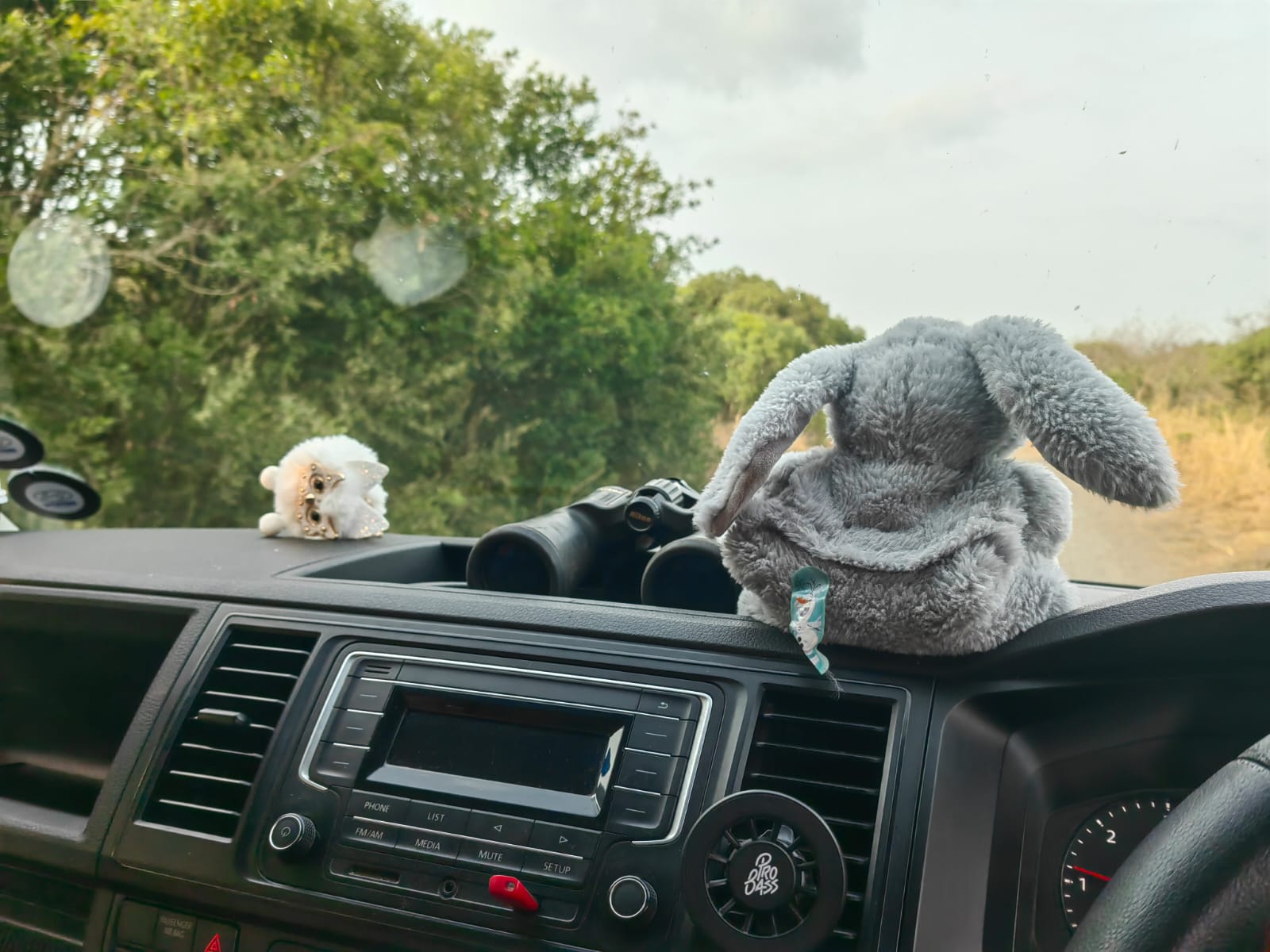
Bring the familiar. A favourite toy, a familiar snack, a known book. The bush is new and potentially overwhelming. Familiar objects provide an anchor. There is no rule that says everything in the vehicle has to be safari-themed.
Lower your expectations of behaviour and raise your expectations of the experience. Your child may fidget. They may be louder than you’d like at a sighting. They may fall asleep at the exact moment the lion appears. None of that means the safari has failed. It means a child had an experience in the bush – and that experience, however imperfectly received, will settle in them in ways you may not see for months or years.
Resources to Help You Prepare
Whether you are planning a guided safari with us at The Little Bush Baby Company or heading out on a self-drive adventure, having the right resources in the vehicle makes all the difference – especially for neurodivergent children who benefit from familiar, engaging activities between sightings.
Our Wildlife Safari Learning Bundle in the Etsy shop has everything you need – activity sheets, wildlife fact cards and more, all designed to keep curious children engaged, learning and absorbed in the natural world around them. Perfect for the quiet stretches between sightings when little hands need something purposeful to do.
SHOP THE WILDLIFE SAFARI LEARNING BUNDLE
And if you want to start building wildlife knowledge before you even leave home, our free Safari Animal Mini Pack is a brilliant first step — six pages of wild learning straight to your inbox.
GET YOUR FREE SAFARI ANIMAL MINI PACK
A Final Thought
The parent who told me she wanted a score of 100 on the likelihood-of-being-eaten scale made me laugh – but her underlying question was the one every parent as thinks about when considering safari for their neurodivergent children. That their child’s needs are too much. That safari is for other families, neurotypical families, families whose children can sit still and be quiet and engage in the right way.
Safari for neurodivergent children is not a niche experience – it is simply a safari that has been designed with the right child in mind.”
I want to say directly to that parent, and to every parent reading this who has felt the same way: the bush does not ask your child to be neurotypical. It does not ask them to sit still, make eye contact, follow social scripts or perform attention in the approved way or in anyway. It asks only that they show up.
And in my experience – clinical and personal – neurodivergent children who show up to the bush very often find something there that the rest of the world has never quite managed to give them.
Space. Acceptance. And something genuinely, irresistibly worth paying attention to.
Let Africa teach your children what the world is made of.
Written by Katie Wormald – paediatric nurse, nurse specialist, health visitor, mother of three and co-owner of The Little Bush Baby Company. Katie lives in KwaZulu-Natal, South Africa on the edge of iSimangaliso Wetland Park.
Great content! Keep up the good work!