The Best African Wildlife Books for Children – Our Family Favourites
African wildlife books for children have a particular kind of magic – especially when you put the right one in a child’s hands at exactly the right moment. Finding the best african wildlife books for children has been one of the most rewarding parts of raising our three wildlings. Read on for our best African Wildlife books for children.
[This post contains affiliate links marked with ✦ – this means I may earn a small commission if you purchase through my links, at no extra cost to you. I only ever recommend books our family genuinely loves. Thank you for supporting Kate on Safari].
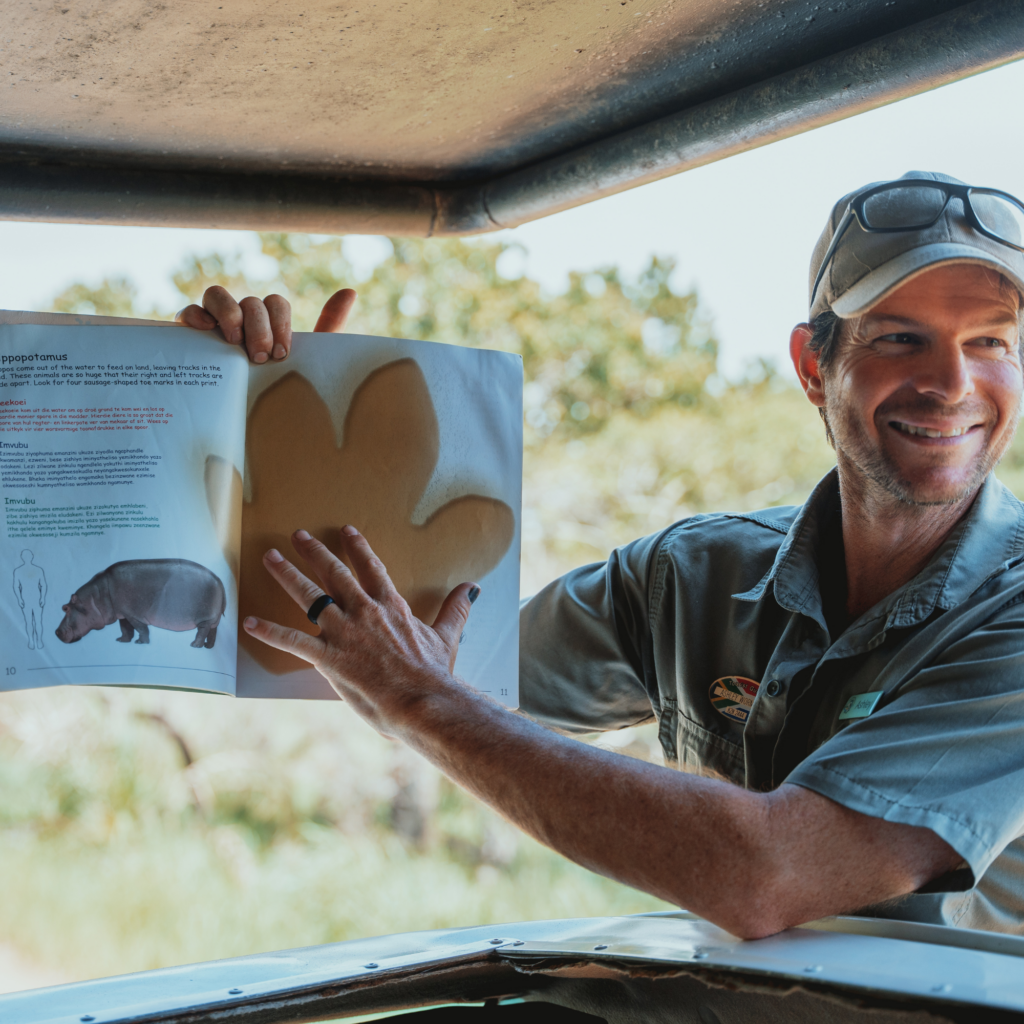
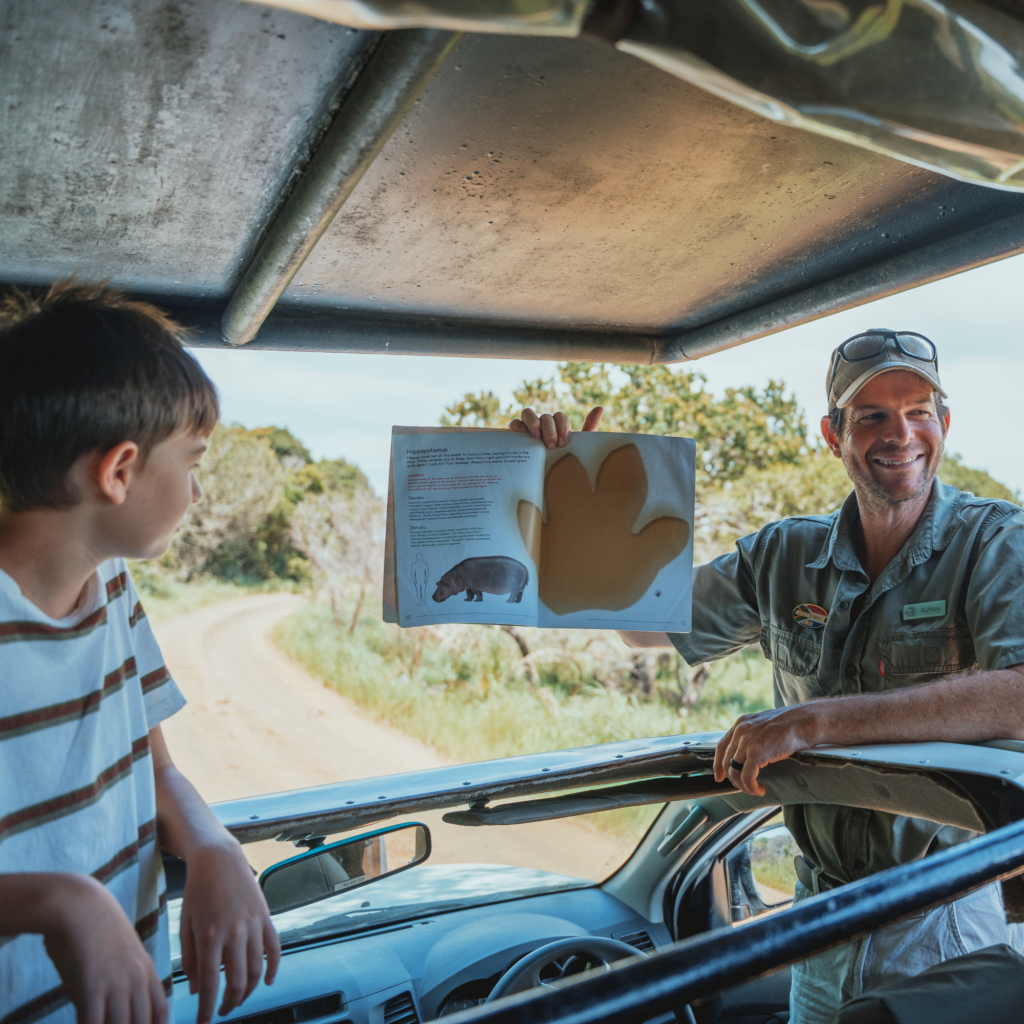
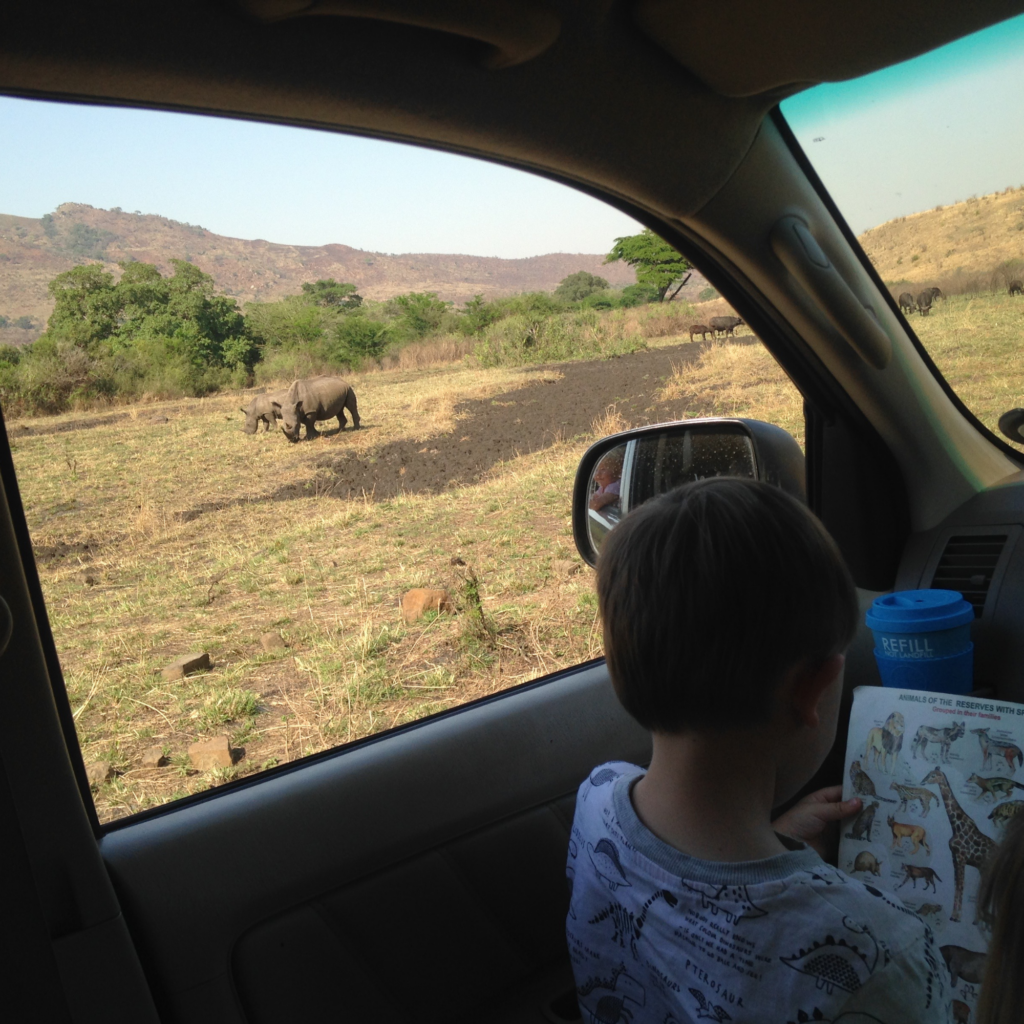
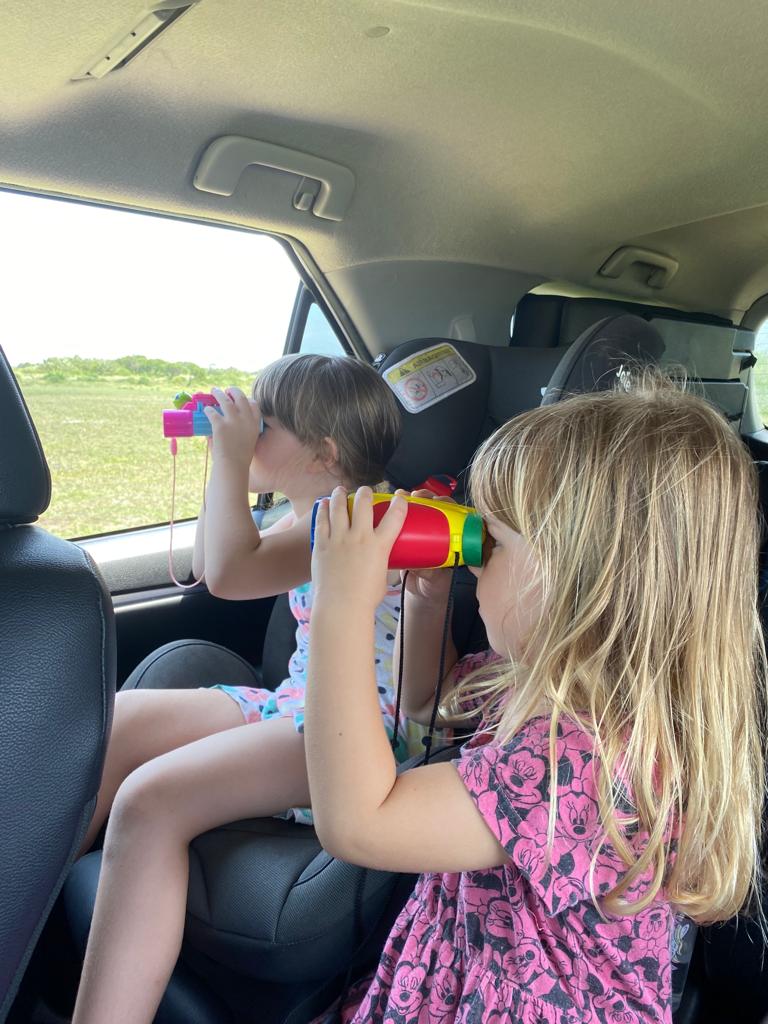
We have a ritual in our house – and it starts long before we get home. On every game drive, alongside the binoculars and the snacks and the sunscreen, we pack books. Reference books, mostly: Sasol Birds of Southern Africa comes out the moment anything feathered crosses our path. My First Book of Mammals in Southern Africa has practically lived in the back of the vehicle. But we pack reading books too – How the Rhino Got His Baggy Skin, The Ugly Five, Giraffes Can’t Dance. Because when you spot a rhino on a dusty track and your five-year-old immediately wants to know the story behind those magnificent folds of skin, you want to be ready.
By the time we get home, the questions have already been half-answered. And then we pile onto the sofa and go deeper – finding the animals we saw, arguing about whether the impala we spotted was actually a bushbuck, reading the elephant page for the seventeenth time until someone knows it by heart.
Why Books and the Bush Belong Together
Books don’t replace the bush. But they deepen it – both in the field and afterwards. They give children a way to hold onto what they’ve seen and carry it forward into the next sighting, the next conversation, the next question.
I am a former paediatric nurse and health visitor, so I understand child development from both a clinical and lived perspective. And I can tell you with complete confidence – the families whose children develop a lasting connection to the natural world are almost always the ones whose homes are full of good books about it.
These are our genuine family favourites. The ones that have survived multiple readings, sticky fingers, and being carried across game reserves in a small rucksack. I hope they find their way into your home too.

The Best African Wildlife Books for Children Under 5‘s
✦ Giraffes Can’t Dance by Giles Andreae
If there is one African animal picture book every child should own before the age of five, it’s this one. Gerald the giraffe believes he can’t dance – until he finds his own rhythm under the African stars. The illustrations are warm and joyful, the message is genuinely moving, and children ask for it again and again.
We have read this so many times the spine has given up entirely. That is the best review I can give any book. It also comes on every game drive – there is something wonderful about reading it aloud in the bush with real giraffes somewhere in the distance.
Perfect for: ages 2–6 / bedtime reading / in the vehicle on safari
✦ The Ugly Five by Julia Donaldson
The wildebeest, the hyena, the vulture, the warthog and the marabou stork – Africa’s so-called ugly five – each convinced they are the ugliest animal on the plain. Julia Donaldson’s rhyming text is irresistible and the message, predictably and perfectly, is one children need to hear. This one comes on drives with us because spotting a hyena or a warthog and then pulling out the book is one of those small moments children remember for years.
Perfect for: ages 2–6 / rhyme and rhythm / wildlife recognition on safari
✦ How the Rhino Got His Baggy Skin by Andrea Florens & Claire Norden
A beautifully illustrated South African picture book that answers the question every child asks the moment they spot a rhino – why does his skin look like that? Every time we drive past a white rhino and someone asks, this comes straight out of the bag. The illustrations are stunning and the storytelling is gentle and warm. A perfect introduction to rhino for very young children, and one that carries extra weight given how urgently these animals need protecting.
Perfect for: ages 2–6 / in the vehicle on safari / rhino conservation awareness
✦ Handa’s Surprise by Eileen Browne
Handa sets off through the Kenyan countryside with a basket of fruit on her head – and Africa’s animals have other ideas. A beautiful, gently funny story about a journey through the African landscape with animals children will immediately recognise and love. The illustrations are extraordinary – rich, warm and completely authentic in their depiction of East African wildlife and landscape.
Perfect for: ages 2–5 / early readers / wildlife recognition

✦ Monkey Puzzle by Julia Donaldson
A small monkey is looking for his mother and a butterfly tries to help – with wonderfully chaotic results involving elephants, parrots, frogs and more. Julia Donaldson’s rhyming text is as irresistible as always and the African animal cast is perfectly chosen.
Perfect for: ages 2–5 / animal recognition / rhyme and rhythm
African Wildlife Field Guides to Take on Every Game Drive
These African wildlife books for children are not coffee table books. They live in the vehicle, get handled constantly, and earn their place every single time we go out.
✦ Sasol Birds of Southern Africa
The definitive field guide for southern Africa and the one no vehicle should be without. The moment anything feathered appears – a lilac-breasted roller on a fence post, a fish eagle overhead, something small and brown that nobody can identify – this comes out. My children have learned to use it properly: checking the range maps, comparing similar species, arguing about whether the markings match. For families spending any time in the bush, this is essential.
Perfect for: all ages with adult guidance / in-vehicle safari kit / serious young birders
✦ My First Book of Mammals in Southern Africa – and the full series
This series is one of the best wildlife reference resources available for children and it practically lives in our vehicle. Clear photographs, accessible facts, and enough detail to satisfy real questions in the field. My children reach for it constantly – checking markings, reading about behaviour, settling arguments about whether what we just saw was a mongoose or a genet. The full series covers birds, trees, insects and more, and each volume is worth having.
Perfect for: ages 5–10 / in-vehicle identification / building genuine wildlife knowledge
✦ Pocket Guide Mammals of Southern Africa by Chris and Mathilde Stuart
Not a children’s book — but one of our non-negotiables on every drive. Lightweight, comprehensive and genuinely useful in the field, my children use it alongside the Mammals series to identify every animal we spot and argue about which subspecies we’re looking at. If you are visiting South Africa or any southern African country with children aged 7 and above, pack this. You will reach for it constantly.
Perfect for: ages 7+ / in-vehicle safari kit / serious young naturalists
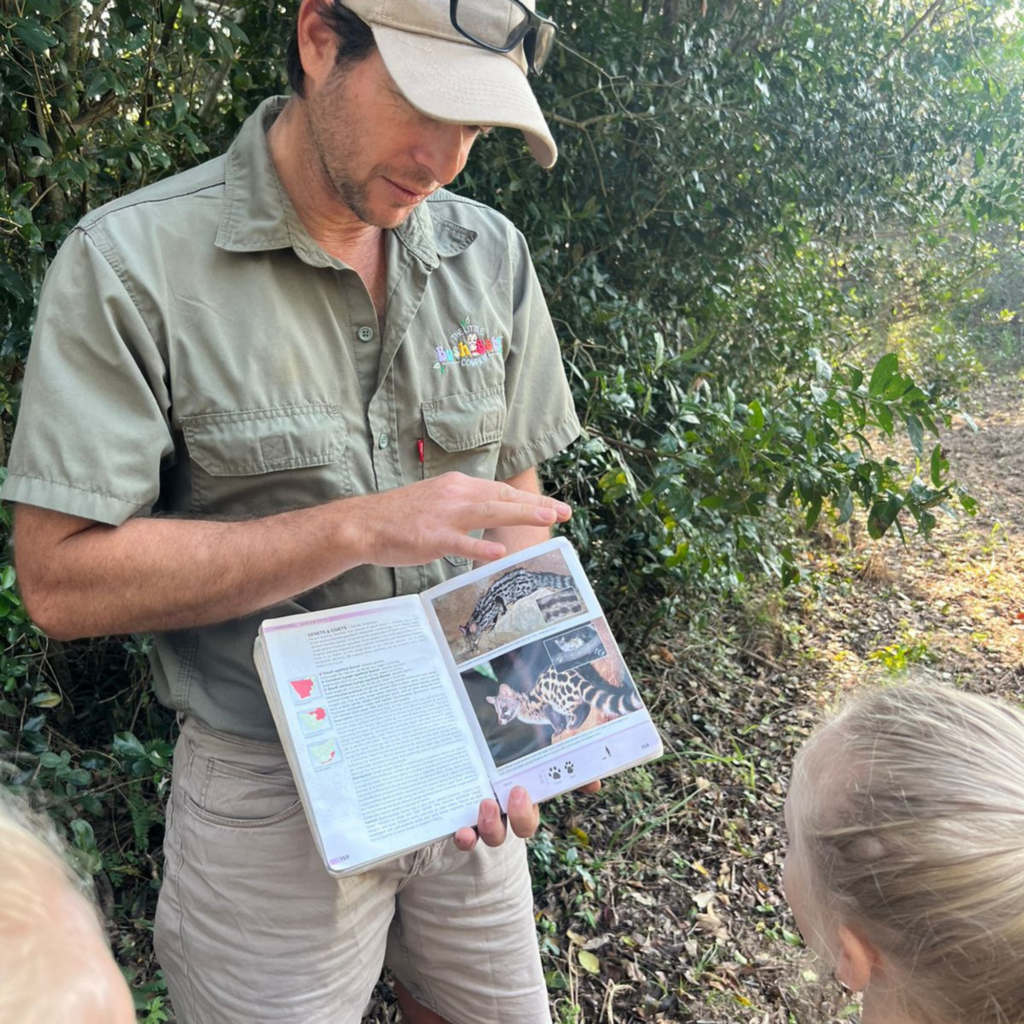
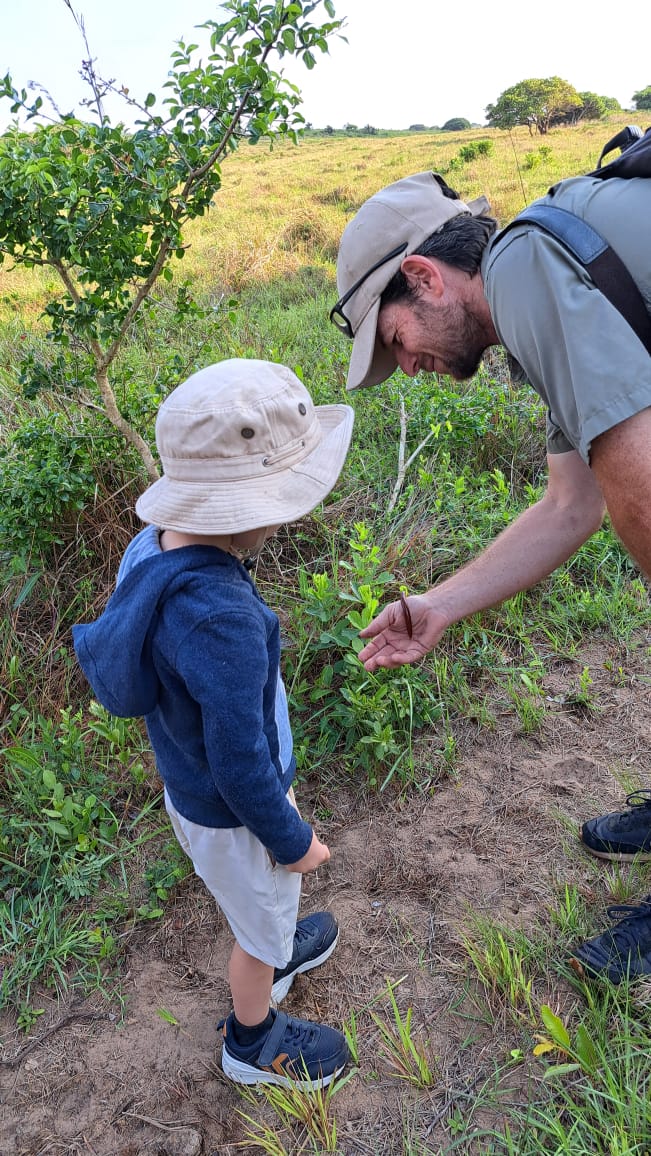
These are the books we take on every drive — and the ones our children reached for constantly during our City Nature Challenge morning in iSimangaliso.
African Wildlife Books for Children Ages 5 to 9
✦ Animal Ultimate Handbook: The Need-to-Know Facts and Stats on More Than 200 Animals by DK
DK’s Ultimate Handbooks are the gold standard of children’s wildlife reference – and this edition is exceptional. Stunning photographs, child-friendly facts, and enough depth to satisfy even the most persistent questioner. Moreover, with more than 200 animals covered, it works brilliantly alongside real safari sightings — my children reach for it after almost every drive. We have used this to look up everything from elephant communication to the hunting speed of a cheetah, and it never disappoints.
Perfect for: ages 5–10 / fact lovers / post-safari reading
✦ National Geographic Little Kids First Big Book of African Animals
National Geographic consistently produces some of the best wildlife photography in children’s publishing and this edition is specifically designed for younger readers – which makes it, consequently, one of the most useful African wildlife books for children we own. Bold, beautiful and packed with age-appropriate facts that make children gasp. A brilliant first book for children who are just beginning to discover Africa’s wildlife and want to know everything about everything immediately.
Perfect for: ages 3–7 / visual learners / first wildlife introduction
Children’s African Wildlife Books for Young Conservationists
✦ The Lawrence Anthony Collection – The Elephant Whisperer, An Elephant in My Kitchen & The Last Rhinos
Lawrence Anthony was a South African conservationist who spent his life saving wild animals at his Thula Thula game reserve in KwaZulu-Natal – not far from where we live. This three-book collection brings together his most beloved stories: the rogue elephant herd he risked everything to save, the rhino poaching crisis he fought to expose, and the story of Thula Thula continuing after his death. These are adult books – but they are, without question, the ones we read aloud together as a family. When our eldest heard the chapter about the elephants arriving at Thula Thula she went completely quiet. Then she said – “why don’t more people do this?” That is exactly the question we want our children to be asking.
If your children are as elephant-obsessed as ours, our elephant facts for kids post is a brilliant companion read.
Perfect for: ages 11+ read together as a family / conservation stories / KwaZulu-Natal connection
✦ The Last Elephants edited by Don Pinnock
For older children and parents who want to understand the full picture of elephant conservation in Africa – the threats, the heroes, the hope. Beautifully written and photographed, this is the book that moves from wonder into action. Not light reading – but important reading. The kind that stays with children long after they’ve finished it.
Perfect for: ages 10+ / conservation education / family reading together
✦ Survivors: The Animals and Plants That Time Has Left Behind by Richard Fortey
A slightly unexpected entry – but one of the most fascinating books for children who want to understand why Africa’s animals have survived when so many others haven’t. Beautifully written, scientifically grounded and completely absorbing.
Perfect for: ages 10+ / natural history / curious minds
How We Use Books Alongside Our Printables
The best African wildlife books for children work alongside hands-on resources in our house, Books and printable resources work together – one deepens the other.
After reading the elephant chapter in a DK book, my children colour their elephant page from our Safari Animal Fact Cards and try to write the scientific name underneath. After a game drive where we spotted a leopard, we find every leopard fact we can and add it to our nature journal. And on the drive itself, when the Sasol guide has settled the bird debate and the Mammals series has confirmed the subspecies, sometimes we read a chapter of Elephant Whisperer as the sun goes down.
If you want to bring this kind of layered wildlife learning into your family’s everyday life, get our free Safari Animal Mini Pack is a good place to start.
And if you’re ready for more – our full Safari Animal Fact Card Set has 10 beautifully designed cards covering all the animals in this post and more.
A Note From a Former Health Visitor
In eight years of visiting families in their homes I noticed something consistently (and then something I wanted to adopt when I had my own children) – the children with the richest inner lives, the most questions, the deepest capacity for wonder, almost always had homes full of good books about it.
Not expensive books. Not perfectly curated bookshelves. Often books found at charity shops or the local car boot. But books nonetheless. Accessible, well-loved, read together and read alone and read again and again.
Africa has given my children extraordinary experiences. But it’s the books that help them make sense of those experiences – that turn a sighting into a story, a question into an answer, a moment of wonder into a lifelong curiosity. In the vehicle on a dusty track, or piled on the sofa afterwards – it all counts.
I hope this list of african wildlife books for children helps you build your own wild library.🌍
Let Africa teach your children what the world is made of.
Written by Katie Wormald – paediatric nurse, health visitor, mother of three and founder of Kate on Safari. Katie lives in KwaZulu-Natal, South Africa on the edge of iSimangaliso Wetland Park.
One Comment