The Big 5 Animals of Africa: A Parent’s Guide to Safari’s Most Iconic Wildlife
If you’ve ever wondered what the Big 5 animals of Africa actually are – and why these five specifically – you’re about to find out.
If you’re looking for elephant facts for kids that go beyond the basics – you’re in exactly the right place.
Wait – wrong post. Let me start again. 😄
If your child has ever asked about the Big 5 animals of Africa on the way to a game reserve or if you’ve asked yourself the same question and quietly hoped nobody noticed – this post is for you.
The Big 5 is one of Africa’s most famous wildlife terms. Every safari brochure mentions them. Every game reserve promises them. But what does it actually mean? Where does the term come from? And what makes these five animals so extraordinary that they earned their own collective name?
I’ve lived in KwaZulu-Natal, South Africa for years. My children have grown up with these animals as part of their everyday world. And I still find the Big 5 endlessly fascinating – not just as wildlife, but as a window into Africa’s history, ecology and soul.
Here is everything you and your children need to know.
What You’ll Find in This Post:
- What the Big 5 actually are and where the term comes from
- Key facts about each animal written for families with children
- Talk about it prompts for each animal – perfect for game drives
- Free printable resources to bring the learning to life
- Recommended books for going deeper
What Are the Big 5 Animals of Africa?
The Big 5 animals of Africa are:
🦁 The Lion 🐘 The African Elephant 🦏 The African Buffalo 🐆 The Leopard 🦏 The White Rhino (or Black Rhino – both count)
The term has nothing to do with size – the giraffe is taller than all of them, and the hippo is heavier than most. It comes from big game hunting in the 19th and early 20th centuries, when trophy hunters considered these five animals the most dangerous and difficult to hunt on foot.
It’s a term with a complicated history. But today the Big 5 has been reclaimed by conservation – these five animals are now among the most protected on earth, and spotting all five on a single safari is considered one of wildlife watching’s greatest achievements. Today the big 5 animals of Africa are celebrated as conservation icons rather than hunting trophies.
1. The Lion – Africa’s Most Iconic Voice
Panthera leo
There is nothing quite like hearing a lion roar for the first time. Not a recording – the real thing, rolling across the bush at dusk, felt as much as heard in your chest. My children went completely silent the first time it happened. That silence said everything.
What makes lions extraordinary:
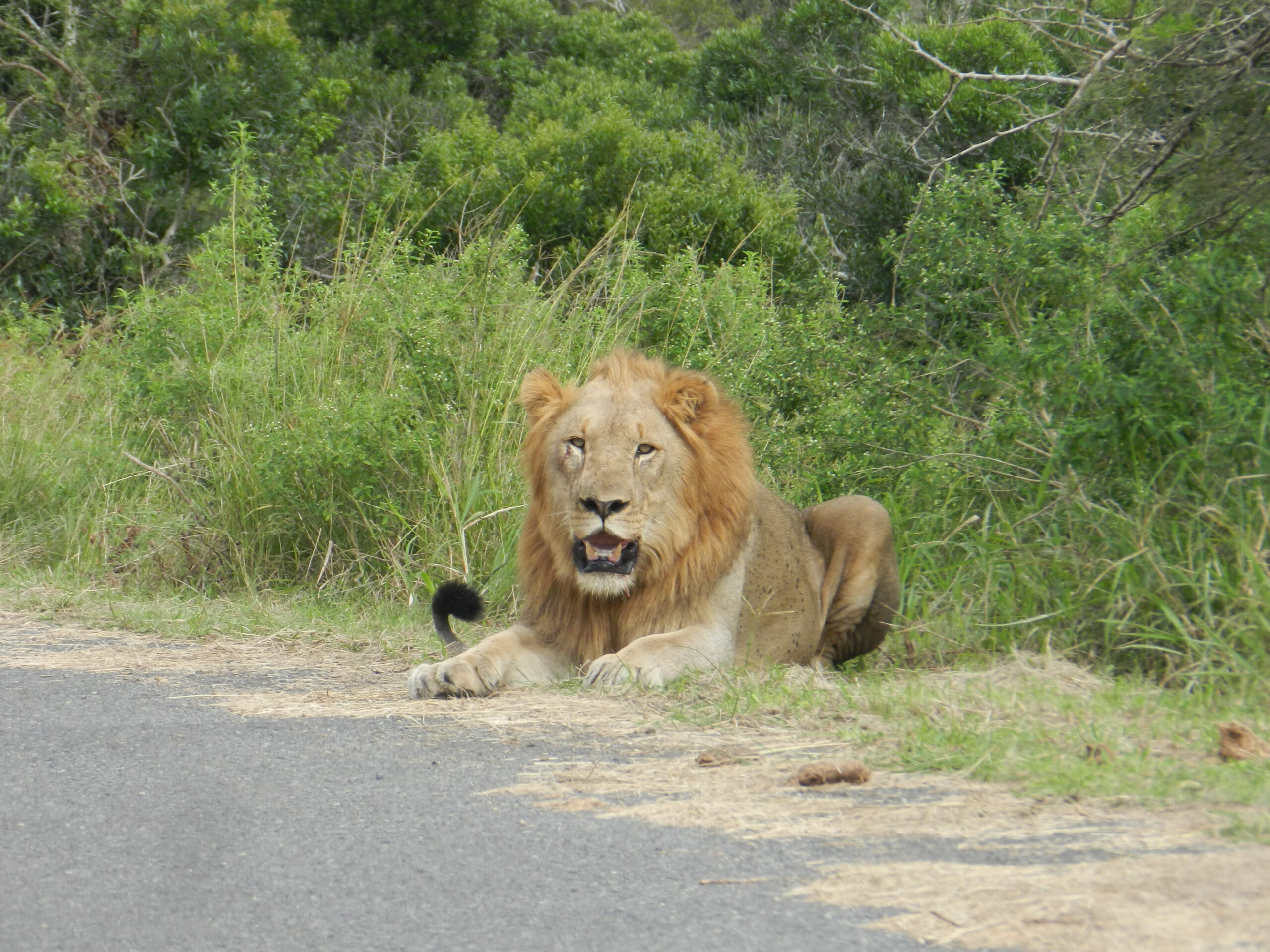
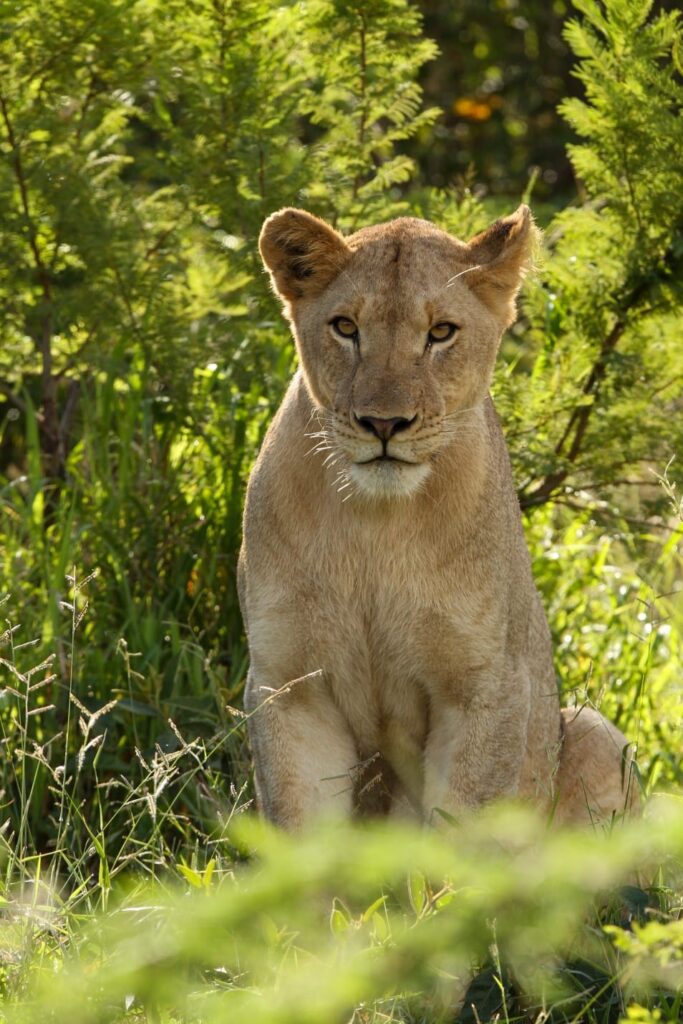
The lion is arguably the most iconic of the big 5 animals of Africa. Lions are the only cats on earth that live in social family groups called prides. A pride can contain anywhere from 3 to 40 individuals and is led and held together by the females – the lionesses are the true architects of lion society.
Despite their reputation as kings of the jungle – lions don’t live in jungles – they are surprisingly vulnerable. Lion populations have declined by over 40% in the last three decades. Fewer than 25,000 wild lions remain in Africa.
Key facts for children:
- A lion’s roar can be heard 8 kilometres away
- Lions sleep and rest for up to 20 hours a day
- Lionesses do almost all of the hunting – together, as a coordinated team
- Cubs are born with spots that fade as they grow older
- A male lion’s mane darkens with age – the darker the mane, the older and stronger the lion
Talk about it on your game drive: If you spot a lion resting, count how many you can spot in the pride. Can you tell the difference between the males and females? Who seems to be in charge?
2. The African Elephant – The Gentle Giant
Loxodonta africana
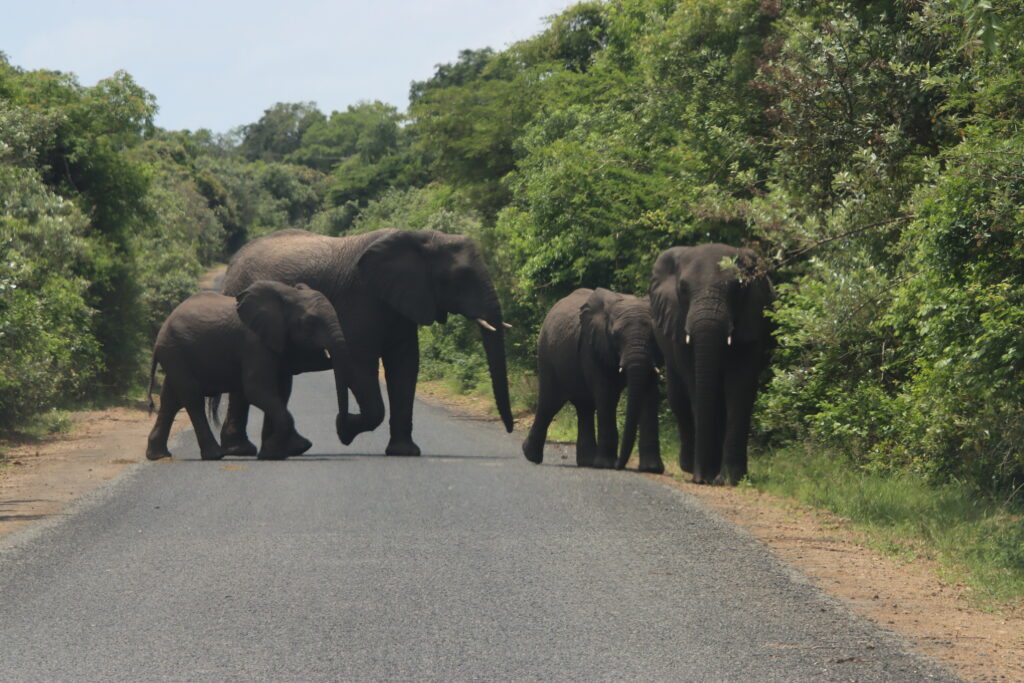
The elephant is the largest of the big 5 animals of Africa. I have written about elephants at length in a previous post – because they deserve it. But in the context of the Big 5 it’s worth understanding why such a gentle, intelligent animal ended up on a list originally defined by danger.
The answer is that elephants are not always gentle. A startled or threatened elephant – particularly a mother protecting her calf – is one of the most dangerous animals on earth. Early hunters learned this at great cost.
What makes elephants extraordinary:
Elephants are the architects of the African landscape. They knock down trees, dig waterholes, and create pathways through the bush that dozens of other species depend on. Remove the elephants and the entire ecosystem shifts.
They are also, as I’ve written before, among the most emotionally complex animals we know of – grieving their dead, comforting each other when distressed, and remembering faces and places for decades.
Key facts for children:
- African elephants are the largest land animals on earth
- A baby elephant is cared for by every female in the herd
- Elephants communicate through vibrations in the ground felt through their feet
- An adult elephant eats up to 150kg of food every single day
- Elephants can recognise themselves in mirrors – a sign of self-awareness
Talk about it on your game drive: Watch how the herd moves together. Who leads? How do the adults position themselves around the calves? What do you think they’re communicating?
Want to go deeper on elephants? Read our full post: 10 Fascinating Elephant Facts for Kids.
3. The African Buffalo – The Unpredictable One
Syncerus caffer
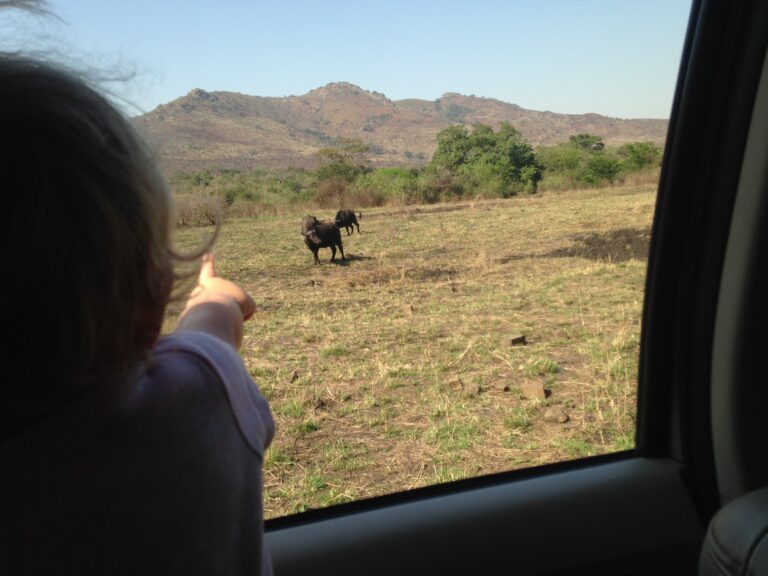
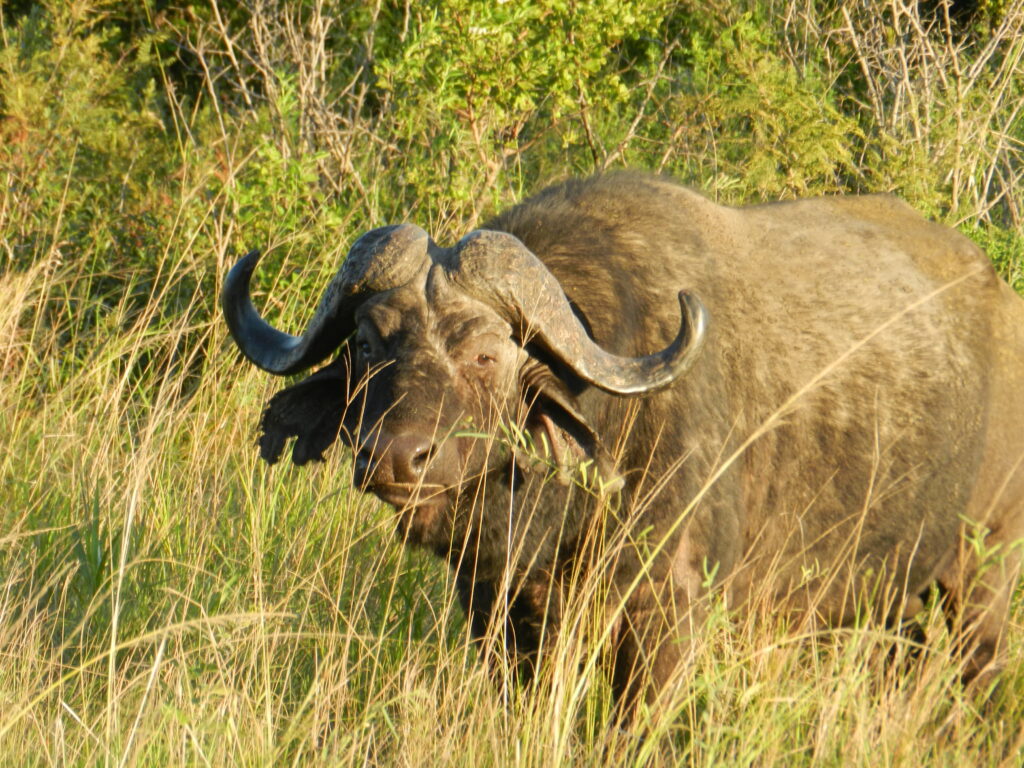
The buffalo is the most underestimated of the big 5 animals of Africa. Of all the Big 5 the buffalo is perhaps the least celebrated – and the most underestimated. Safari guides will tell you privately that the buffalo makes them more nervous than any other animal. Not the lion. Not the elephant. The buffalo.
Here in KwaZulu-Natal we have large buffalo herds in iSimangaliso Wetland Park just near our home. Watching a herd move – thousands of animals flowing across the landscape like a dark river – is one of the most humbling wildlife experiences Africa offers.
What makes buffalo extraordinary:
Buffalo have a remarkable democratic society. When a herd needs to decide which direction to move, the females vote – literally – by standing up, facing the direction they want to go, and then lying back down. The direction with the most votes wins. This has been observed and documented by researchers.
They are also fiercely protective of each other. Buffalo have been documented returning to rescue herd members under attack – even taking on lions to do so.
Key facts for children:
- Buffalo herds can contain thousands of individuals
- They vote democratically on which direction to travel
- Buffalo have never been successfully domesticated – unlike their Asian cousins
- Old solitary male buffalo are called dagga boys – considered the most dangerous of all
- Buffalo are responsible for more hunter fatalities in Africa than any other Big 5 animal
Talk about it on your game drive: Look at the oxpecker birds sitting on the buffalo’s backs. What do you think they’re eating? Why might a buffalo let a bird sit on it?
4. The Leopard – The Ghost of the Bush
Panthera pardus
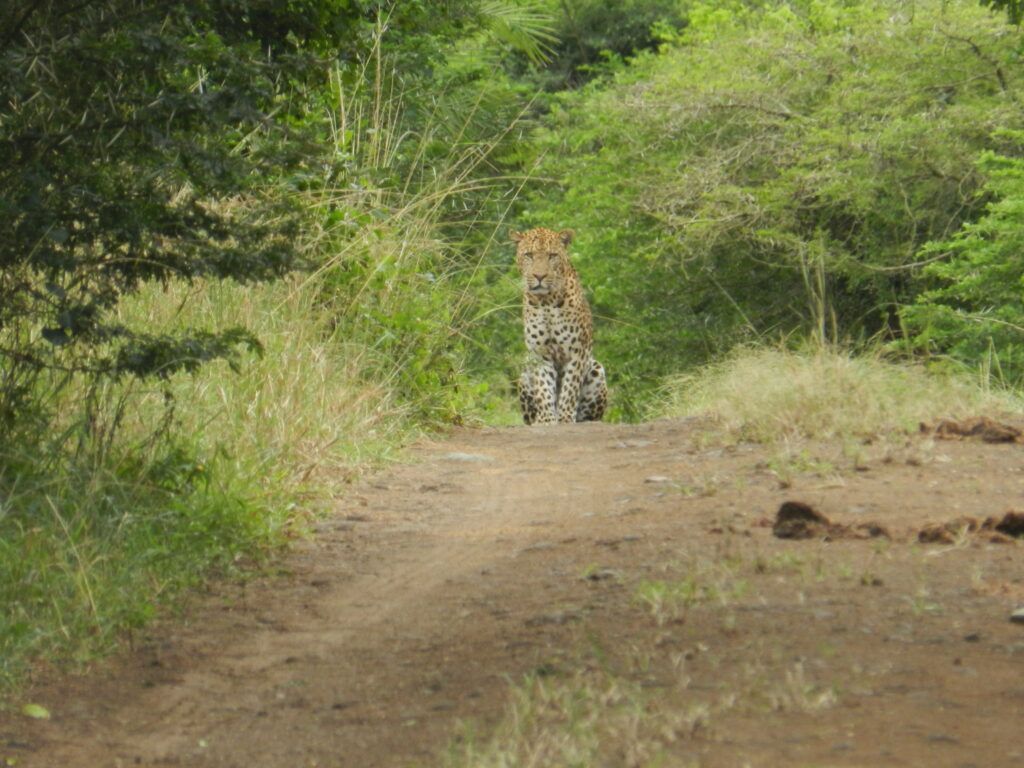
The leopard is the most elusive of the big 5 animals of Africa. In years of living in KwaZulu-Natal I have seen leopard a handful of times. Each sighting felt like a gift – something the bush chose to show me rather than something I found. Leopards move through the landscape like shadows. They are there and then they are not.
Of all the Big 5 the leopard is the one that most reminds me that Africa is not ours. We are visitors in their world, not the other way around.
What makes leopards extraordinary:
Leopards are the most adaptable of the big cats – found in more countries and habitats than any other large feline. They survive in deserts, rainforests, mountains and suburbs. Leopards are powerful enough to carry prey twice their own body weight up into a tree – hoisting it out of reach of lions and hyenas.
Largely nocturnal, leopards are almost entirely solitary. Most leopard sightings happen at dawn or dusk when they are briefly visible before the darkness reclaims them.
Key facts for children:
- Leopards are strong enough to carry prey twice their weight up a tree
- Every leopard’s spot pattern is unique – like a fingerprint
- They are the only big cat that consistently stores food in trees
- Leopards can run at 58km/h and leap 6 metres horizontally
- Black panthers are actually leopards – the dark colouring is caused by a genetic condition called melanism
Talk about it on your game drive: Leopards are masters of camouflage. Before your guide points one out – try to spot it yourself. Look for the tail hanging down from a branch, or the shape of ears in long grass. What other animals use camouflage to hide?
5. The White Rhino – A Conservation Success Story
Ceratotherium simum
This is the animal that makes me feel both grief and hope simultaneously. The rhino is the most endangered of the big 5 animals of Africa.
In 1895 the white rhino was functionally extinct – fewer than 50 animals remained in the entire world, all of them in a small area of KwaZulu-Natal not far from where I’m writing this. Through one of conservation’s greatest efforts – protecting, breeding and relocating – the white rhino population recovered to around 20,000 animals by the early 2000s.
Why the White Rhino Nearly Disappeared
Then poaching surged. Driven by demand for rhino horn in parts of Asia – where it is falsely believed to have medicinal properties – the white rhino is once again under severe pressure. South Africa loses a rhino to poachers approximately every 10 hours.
This is the story I tell my children. Not to frighten them. But because they are old enough to understand that the world is breakable – and that people choose, every day, whether to break it or fix it.
What makes rhinos extraordinary:
A white rhino’s horn is made of keratin – exactly the same material as your fingernails. It has no medicinal value whatsoever. The tragedy of rhino poaching is built entirely on a myth.
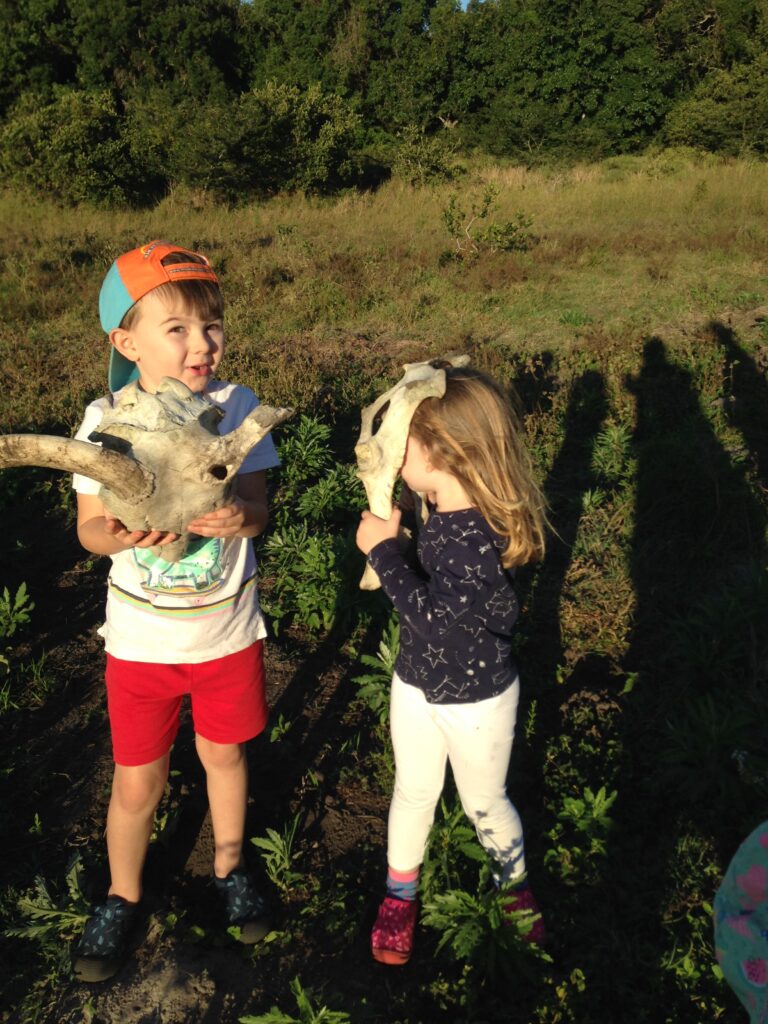
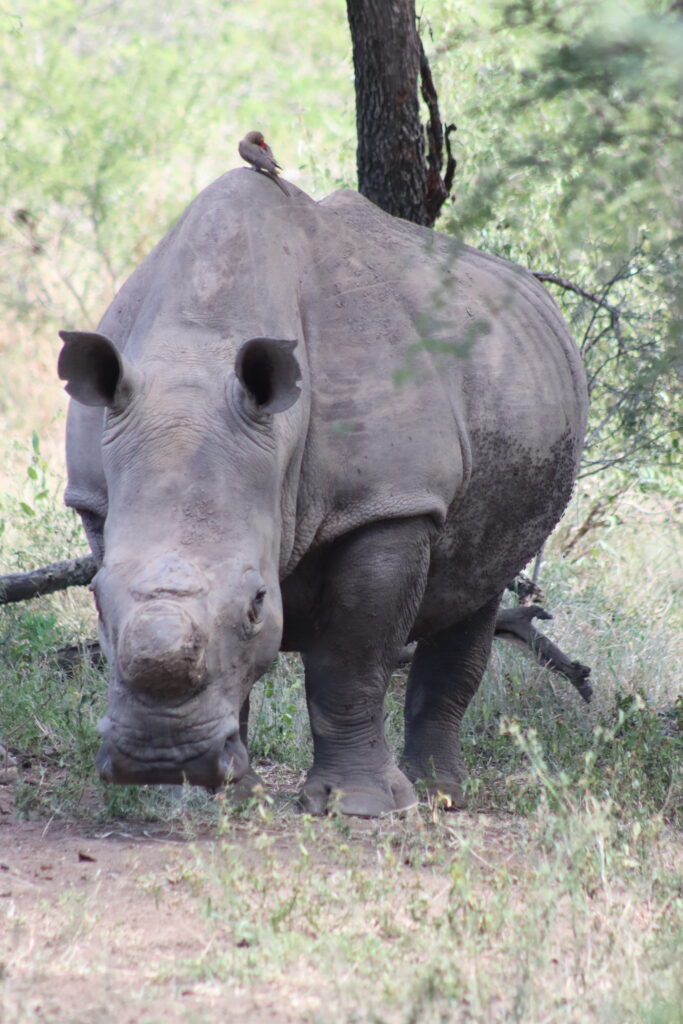
White rhinos are actually remarkably gentle grazers – the name “white” has nothing to do with their colour but is likely a mistranslation of the Afrikaans word “wyd” meaning wide – referring to their broad, flat lips designed for grazing.
Key facts for children:
- A rhino’s horn is made of the same material as your fingernails
- White rhinos are the second largest land animal after the elephant
- They can run at up to 50km/h despite their enormous size
- Rhinos have very poor eyesight but an extraordinary sense of smell
- A group of rhinos is called a crash
Talk about it on your game drive: Look at the shape of the rhino’s lips – wide and flat for grazing grass. Now think about the black rhino’s lips – pointed and hooked for browsing leaves. What does the shape of an animal’s mouth tell you about what it eats?
How to Spot All Five – Tips for Your Family Safari
Spotting all five Big 5 animals on a single game drive is considered a significant achievement – it doesn’t happen every time and that’s part of what makes it special. Here are a few tips for families:
Go early. Dawn is when predators are most active and most visible. The light is also extraordinary – your photographs will thank you.
Be quiet. Children who learn to sit quietly in a game vehicle see more animals than those who don’t. Turn it into a game – who can spot the next animal first?
Look for birds. Oxpeckers on a buffalo’s back. Vultures circling above a kill. Yellow-billed hornbills mobbing a predator. Birds are Africa’s alarm system and they will lead you to the animals.
Listen. An impala’s alarm snort. A francolin calling suddenly. Baboons barking in a tree. These sounds mean something is near. Learn to hear the bush talking.
Let your guide guide. The best safari experiences happen when families trust their guide and follow their lead. Ask questions – good guides love children who want to understand.
The Big 5 at Your Local Safari Park – Making the Most of Every Wildlife Encounter.
You don’t have to be in Africa to discover the Big 5.
Wildlife parks, safari experiences and zoological gardens around the world house these extraordinary animals — and a child who understands what they’re looking at will have a completely different experience from one who simply sees a large animal behind a fence.
Here’s how to turn any wildlife encounter – whether in KwaZulu-Natal or Kent – into a genuinely meaningful learning experience.
Before you go: Read about the animals you’re likely to see together as a family. Not facts to memorise — stories to spark curiosity. Why does the lion sleep so much? Why does the elephant use its trunk that way? Arriving with questions makes children active observers rather than passive visitors.
How to Make Every Wildlife Visit Count
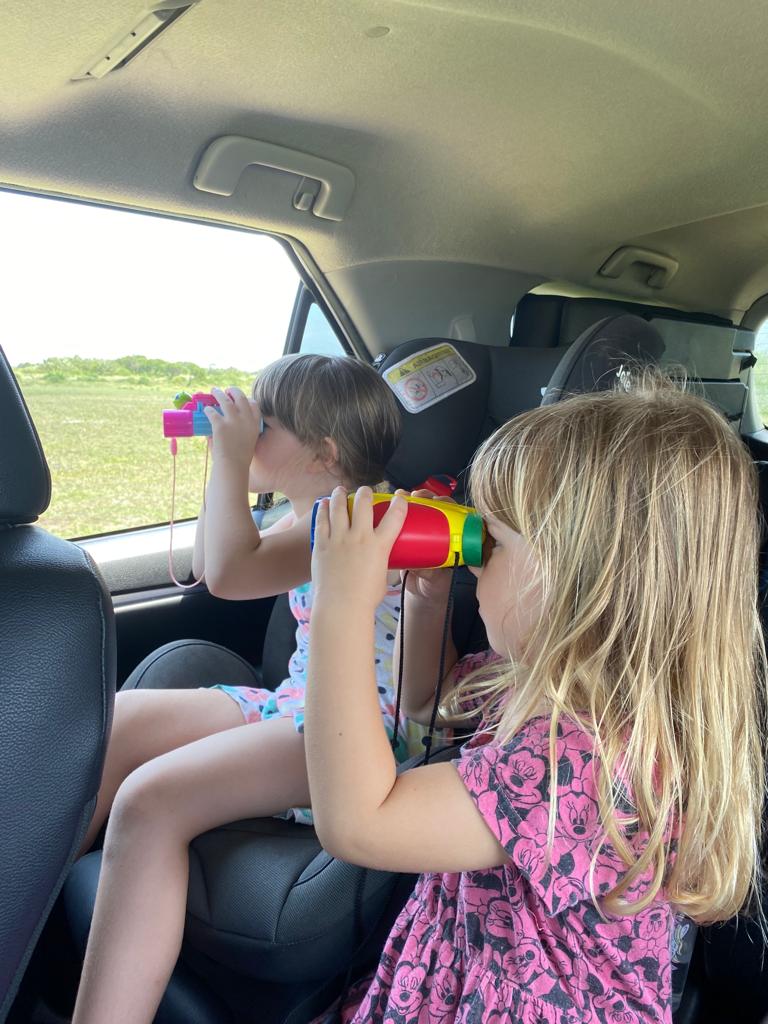
At the park – give each child a job: One child watches for behaviour — what is the animal doing and why? One child looks for interaction between animals — are they communicating? One child is the family photographer — what moment do they most want to capture? Giving children a role transforms a passive visit into an active investigation.
The question that changes everything: Instead of asking “what do you see?” ask “what do you notice?” It’s a small shift but it produces completely different answers. Noticing is deeper than seeing. It’s what wildlife researchers do. It’s what your children can learn to do too.
Current or prehistoric, wildlife is wildlife
Something I’ve noticed over years of game drives with my children is that the Big 5 are never the whole story. Yes – their faces light up when a lion appears or an elephant crosses the road in front of us. But just as often it’s a giraffe moving through the trees in that impossibly elegant way, or a tiny dung beetle rolling its ball across the track, or an antelope species none of us can immediately identify that sends them reaching for their wildlife books to find out more.
That curiosity – the need to know the name, to understand the behaviour, to look it up — is exactly what safari does to children who are paying attention. And it doesn’t stop when you leave Africa. On our last trip to the UK we couldn’t pass the Natural History Museum without going in. The same children who track impala in iSimangaliso were pressing their noses against glass cases studying prehistoric animal fossils with exactly the same intensity.
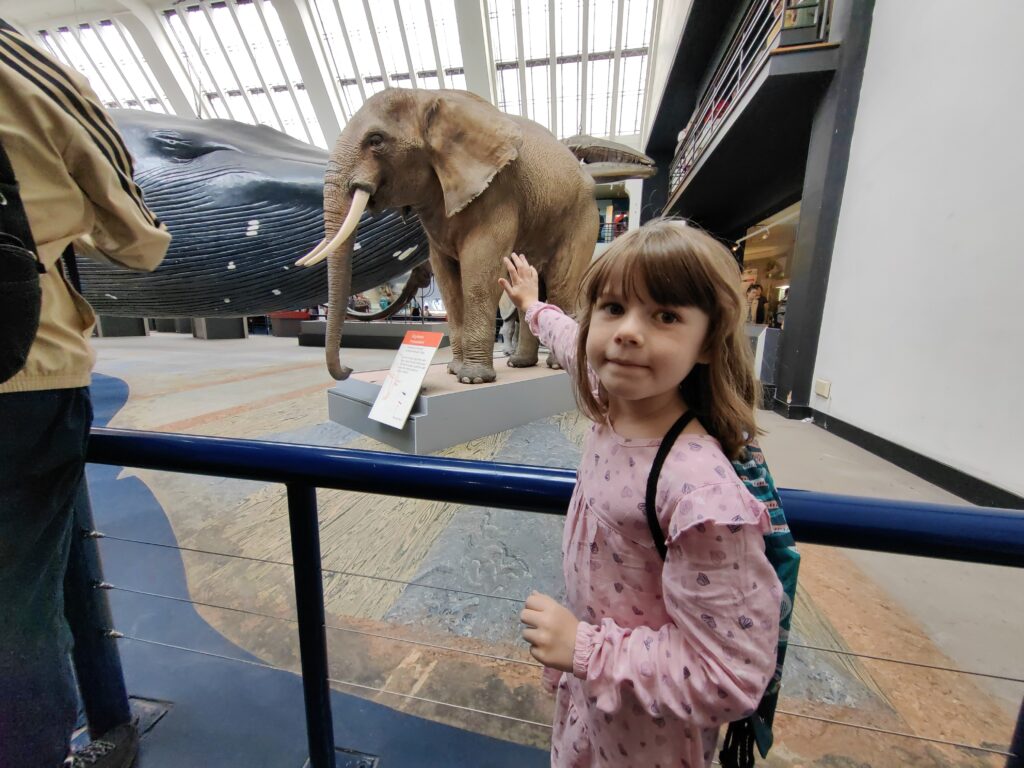
After your visit: Ask each child to draw one animal they saw and write or tell you one thing about it they didn’t know before. Not for a grade — just to seal the memory. The act of drawing something from memory deepens understanding in a way that photographs don’t.
UK and international safari parks worth visiting with children:
- Woburn Safari Park – Bedfordshire, UK. One of the UK’s largest drive-through safari parks with lions, elephants, rhinos and more.
- West Midland Safari Park – Worcestershire, UK. Excellent Big 5 representation and strong educational programmes for children.
- Cotswold Wildlife Park – Oxfordshire, UK. More intimate than a drive-through park, wonderful for younger children.
- Port Lympne Wildlife Park – Kent, UK. One of Europe’s most ambitious rewilding projects. Extraordinary rhino and gorilla experiences.
- Shamwari Private Game Reserve – Eastern Cape, South Africa. For families who want a genuine Big 5 safari experience with exceptional child-friendly programmes.
- iSimangaliso Wetland Park – KwaZulu-Natal, South Africa. Our home. A UNESCO World Heritage Site and one of Africa’s most biodiverse ecosystems. (Biased – but genuinely extraordinary.)
Wherever you encounter Africa’s wildlife – the learning is the same. The wonder is the same. Africa has a way of teaching children things that stay with them forever, whether they’re standing in the Hluhluwe-iMfolozi Park or looking through a fence in the English countryside.
Bring the Big 5 Home – Free Printable
Before your next game drive – or after it – download our free Safari Animal Mini Pack. It includes beautifully designed fact cards for three of Africa’s most extraordinary animals, perfect for printing at home and reading aloud together.
GET YOUR FREE SAFARI ANIMAL MINI PACK
And if your children want to colour their way through Africa’s wildlife – our African Safari Colouring Pages Pack includes all of the Big 5 plus five more magnificent animals.
SHOP THE COLOURING PAGES PACK (Use code WILDONE for 10% off)
Recommended Reading – Big 5 Books for Families
Affiliate links marked with ✦
✦ The Safari Companion by Richard Estes – the definitive guide to African wildlife behaviour. For older children and parents who want to understand what they’re seeing.
✦ Pocket Guide Mammals of Southern Africa by Chris and Mathilde Stuart Easy to use and light weight, one of our must haves on every safari. Covers 120 mammals, big and small.
✦ Giraffes Can’t Dance by Giles Andreae – not Big 5 specifically but the most beloved African animal picture book for young children. A family essential.
✦ My First Book of Southern African Wildlife – by Erroll Cuthbert – Great for younger readers, lovely pictures, and translations into Afrikaans and Zulu.
We hope this guide to the big 5 animals of Africa inspires your next family safari.
Want More Wild Learning?
Every week I send one free nature activity, wildlife story, or wild learning idea to families just like yours – written from our life here in KwaZulu-Natal, South Africa.
Let Africa teach your children what the world is made of. 🌍
Written by Katie Wormald – founder of Kate on Safari and co-owner of The Little Bush Baby Company. Katie lives in KwaZulu-Natal, South Africa with her husband and three children, raising her family in the shadow of iSimangaliso Wetland Park.